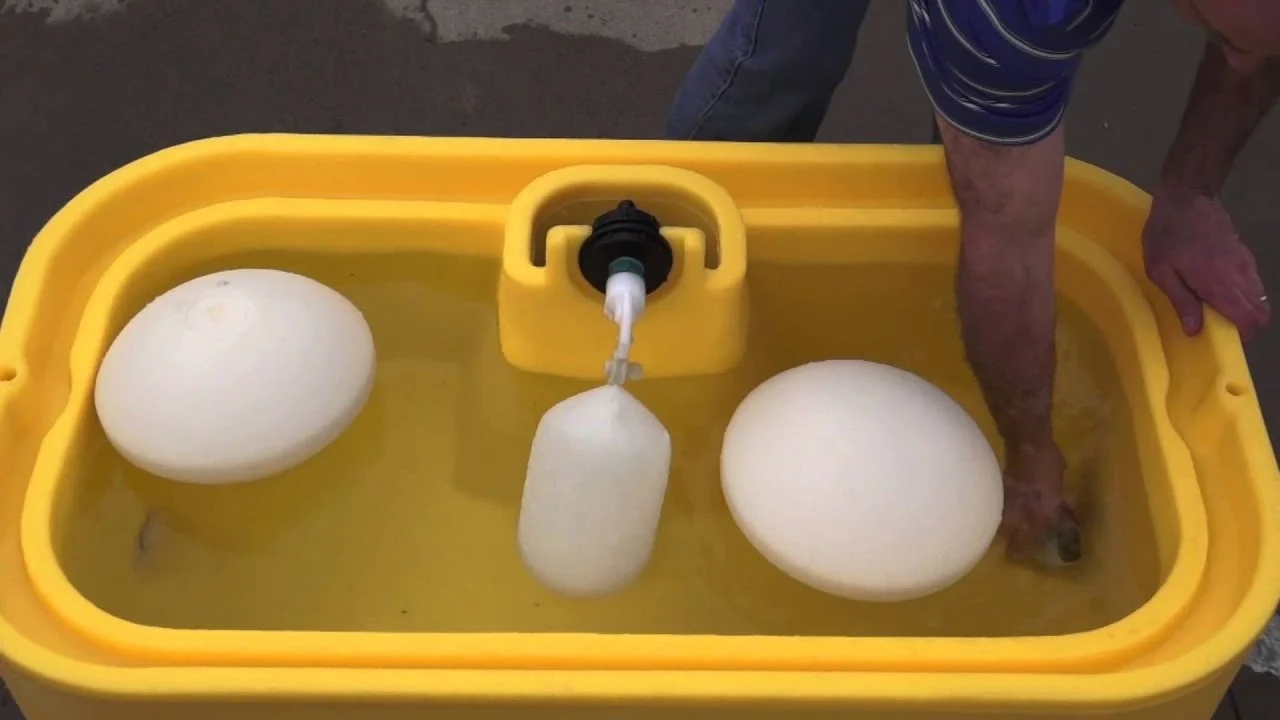

Whether you have one horse or a whole herd, one of the most vital nutrients in their diet is water. Most horse owners follow the general principle that if the water is safe for us to drink, then it is reasonable to assume that it is safe for our horses. While this is a safe bet, horses do have specific water requirements and there are management decisions that can be made to improve the water quality for your horses which is beneficial to their health and happiness. So let’s get back to basics and learn more about how we can provide enough fresh, clean water for our horses.
Water by the numbers
A horse’s body contains 65 to 75 percent water and the percentage varies depending on the age, amount of body fat and muscle mass, and the amount of workload or exercise the horse receives. The amount of water offered to a horse will be based on its weight.
“Most horses in the 1,000 to 1,200 pound range will generally need six to 10 gallons of water daily,” said Bob Coleman, Ph.D., associate professor and equine extension specialist at University of Kentucky. “That is what we are going to offer them as a starting point; some horses may need more or less.”
Keeping Dehydration at Bay
So what is the best way to tell if a horse is getting the proper amount of water? In general, there are two simple tests you can do to assess how well your horse is hydrated – the skin pinch and the capillary refill.
As a horse becomes dehydrated, the skin elasticity decreases. The skin pinch involves taking a fold of skin from the neck, just above the shoulder and lifting it up. If your horse is hydrated it should snap back in place quickly. If your horse’s skin tents up or doesn’t snap back, then this is a symptom of dehydration.
The second test is the capillary refill. You should lift the upper lip of your horse and do a visual inspection of the gums about the teeth. The gums should be pink, shiny, moist and slippery. Then, you should press your thumb against their gums, release your thumb and count how long it takes for the gums to go from a pale, white color to their normal pink color. Normal capillary refill time is under two seconds.
“One of the biggest indicators of water consumption is to monitor how well your horse is eating,” said Coleman. “One of the first things you’ll notice with a horse not drinking enough water is that their dry matter intake will slow down. First, check to make sure your bucket or automatic waterer is clean, and then you need to check if anything is changing the palatability of the water.
“Clinical dehydration happens when a horse has a 6 percent reduction in body weight through the loss of water. Most of us are not going to be weighing our horses and monitoring at that level, but even at a lower loss of weight you’ll notice a change in activity level. Your horse will start to get lethargic.”
Two other common symptoms of dehydration include decreased manure production and decrease in the manure’s moisture content. It is important to know what is normal for your horse. Measuring vital signs when your horse is healthy can give you a good baseline for comparison.
Reduced water intake can lead to very serious health conditions, including impaction colic. A horse who is not drinking enough water can begin to experience dehydration and impaction colic in as few as 48 hours. In the summertime, it is critical to replace water losses as the horse manages its body temperature. When a horse becomes 8 to 10 percent dehydrated, you will need a veterinarian to administer fluids.
Time to Assess Your Water Source
Best management practices involve delivering fresh water to your horse. The days of horses accessing streams and ponds are dwindling for many reasons, including water quality concerns and environmental impact.
“We can use the natural water sources such as streams and ponds,” said Coleman. “I just recommend that you don’t give the horses access to the water source, instead you need to deliver water to the horses in a tank or waterer. We all need to be good stewards. We are not trailing thousands of head of cattle miles and miles to market anymore. Streams don’t need to have horses in the water, this affects water quality for everyone downstream and also can erode the stream banks as the horses enter and exit. Ponds have the same erosion and contamination issues. I would also be concerned about algae blooms. Not all algae are going to cause a problem but unfortunately, you may not know you have a problem until a post-mortem is completed.”
Setting up a proper water delivery system involves designing an area with a concrete or crushed rock pad large enough for all four of the horse’s feet to be on the pad while drinking to help reduce erosion. Other factors to consider are tank/fount capacity, refill rate and tank/fount locations.
Your Horse and Water Quality
The biggest measure of water quality is total dissolved solids (TDS). TDS is comprised of inorganic salts (principally calcium, magnesium, potassium, sodium, bicarbonates, chlorides and sulfates) and some small amounts of organic matter. Elevated TDS can make your water have a bitter or salty taste. If you currently do not have a water quality report available, you might want to consider contacting your local health department.
“We know that TDS of one to three thousand parts per million (PPM) is in the safe range,” said Coleman. “Once you start getting to seven thousand PPM then you have water quality issues. The other item to look at is high coliform counts which are an indication of bacteria. Certain coliforms are not going to bother your horse but the higher counts indicate fecal contamination somewhere along the line which means you need to be concerned about E. coli and salmonella. Also, if you have nitrates (agricultural run-off) in your water, especially if it is a change from prior years, then that is telling you that something is leaching into your water. It might be time to consider a new water source.”
Horses are sensitive to the taste and smell of their water. Water that is high in sulfur or tastes bitter can be masked by flavoring the water with prepackaged electrolyte mixes, packets of Jell-O gelatin powder, apple cider vinegar or any flavoring that your horse prefers.
Delivering Clean, Fresh Water to Your Horse
There are three mandates every watering system needs to meet:
- Keep the water clean.
- Keep the water fresh.
- Keep the water at the right temperature.
Whether you are planning an upgrade or starting from scratch, make sure that your trough and valve combinations are sized to provide as much water as your horse wants while limiting the amount of water that sits stagnant when they are not drinking. The easiest and hassle-free option to consider is an automatic waterer. Top of the line waterers feature rugged, insulated polyethylene or stainless-steel units with designs that seal cold air away from the high capacity valves. Options such as thermostatically controlled heat, self-regulated heaters, immersion heaters, protective shrouds, tamper resistant lids and digital water meters are typically available.
Ritchie Industries, Inc., the company that invented automatic waterers in 1921, has designed some of the best-selling waterers of all time. The Classic Equine by Ritchie waterers are specifically engineered to meet the rigorous standards that horse owners demand.
“We run a nonprofit operation here,” said David Smith, ranch manager at Wolfe Ranch of Quakerdale. “I am the only full time employee and I take care of 12 ranch horses and one boarded horse. We have 11 Ritchie waterers on-site and having fresh water for the horses at the ready is awesome. The maintenance is very minimal and to be able to just walk by with a quick glance to make sure the water is clean and available – that is a real time saver.”
Wolfe Ranch of Quakerdale in Marshalltown, Iowa, is a nonprofit ranch that offers camps, riding lessons and special events. Wolfe Ranch has also partnered with Quakerdale Family Services to provide faith-based Equine Assisted Learning (EAL) and Equine Assisted Psychotherapy (EAP).
“With waterers installed in the fence line I can water two lots at the same time,” said Smith. “No more hauling hoses everywhere and no more broken buckets. Where we can save money, we try to find the best products on the market so the upkeep does not nickel and dime us. Even with the abuse that horses put on the equipment, the Ritchie waterers are holding up very well.”
For more information on Ritchie waterers, visit classicequinebyritchie.com.
A Hydrated Horse is a Healthy Horse
Water is essential to well-being of your horse. Take the time to plan an effective watering system that offers your horse free-choice access to clean, fresh water at all times and be rewarded with a healthy and happy horse.
Written by Audra Kalvar
Audra Kalvar is a freelance writer with a Bachelor of Science in Agriculture from the University of Illinois and over 27 years of experience writing about the agriculture industry. She grew up on a livestock and grain farm in west central Illinois and has managed the family farm for the past 13 years. She currently resides in southern Indiana and raises sheep and chickens.
This fall at the 2018 Women in Agribusiness Summit in Denver, Colorado, Temple Grandin made a bold prediction about the future of the livestock industry. Grandin, a professor of animal science at Colorado State University best known for her work designing humane livestock handling facilities and her autism advocacy, says that meat production may go the way of beer, referring to the growing craft beer industry.
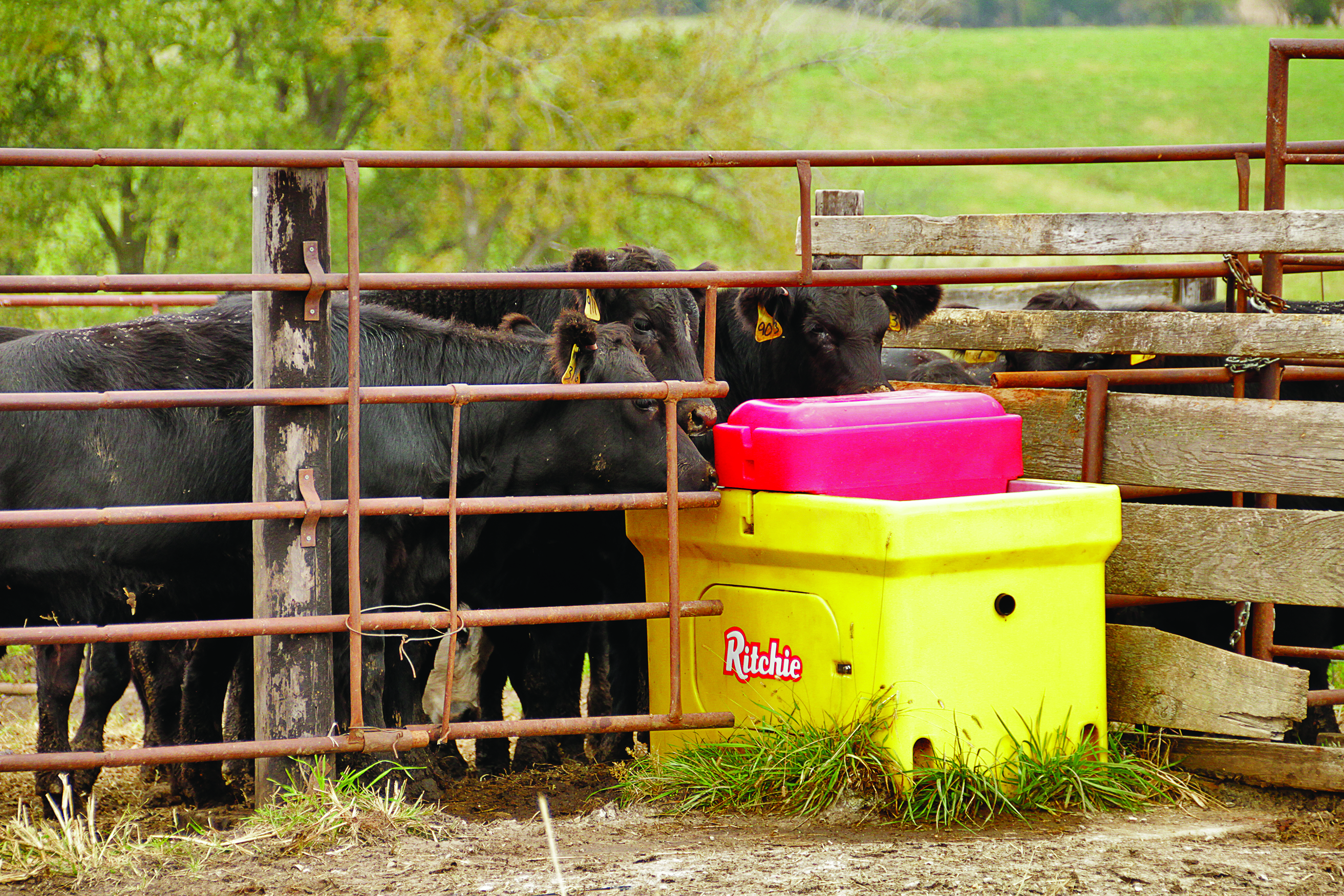
Small Batch Beef?
While it is no secret that changing consumer tastes can transform markets, will the “craft beer model” take root as a method of beef production? Let’s analyze the numbers. Craft beer volume grew 5 percent in 2017 – a year where the overall beer market contracted 1 percent. The craft beer market in the U.S. represents a 12.7 percent share by volume and 23.4 percent market share by dollars in 2017 according to the Brewers Association in Boulder, Colorado. These numbers show a growing and sizable market for craft beer but what does the comparable specialty beef market look like? The collective sales value of all beef with any type of animal production claim including naturally raised, grass fed, organic, no hormones, no antibiotics and combinations of these claims totals just 4.5 percent in retail sales and just over 3 percent market share in volume during the second quarter of 2018.
“The overwhelming majority of consumers are selecting traditional beef products,” said Sara Place, Ph.D. and senior director of sustainable beef production research at the National Cattlemen’s Beef Association. “Beef producers are producing a product that is being driven by consumer tastes for specific traits. Modern consumers want real food, they want realness in their food supply. They are looking for the story of how that beef got from pasture to plate.”
Telling the Beef Sustainability Story
“Here’s the big challenge to the “buy local” movement – over two-thirds of our domestic cattle production occurs in the Great Plains while almost 75 percent of our country’s population live on the coasts,” said Daniel Loy, Ph.D., professor of animal science at Iowa State University and director of the Iowa Beef Center. “You simply can’t buy local if the resources can’t support it responsibly. Cattle farms and ranches today are operating at a very high level of environmental efficiency. Verified programs that rely on education and certification like Beef Quality Assurance or metrics like those being developed by the US Roundtable for Sustainable Beef can provide consumers assurances.”
October 2017 marked the relaunch of the classic “Beef. It’s What’s For Dinner.” campaign that asks consumers to rethink the ranch and understand that there is a shared commitment to engaging consumer concerns, including sustainability. Everything from grazing management plans to humane treatment to water quality is addressed as part of the sound approach to efficient and sustainable production. According to the 2017 Water Quality and Beef Sustainability report prepared by the Iowa Beef Center at Iowa State University, 99.8 percent of all beef producers have implemented at least one water quality improvement practice. 73 percent of graziers provided water sources away from surface water as the top water protection practice.
“Water quality is top of mind for almost all producers,” said Place. “Responsible farmers and ranchers know a clean, reliable source of water is essential, not just for cattle health but for the health of the local ecosystem.”
Since 1921 beef producers have relied on Ritchie Industries, Inc., an Iowa company that invented automatic waterers, to provide clean, fresh water on demand in all weather conditions.
“Ritchie Industries has been a pioneer and innovator in automatic livestock waterers for almost 100 years and our mission is to provide fresh water for life,” said Tyler Yantis, sales manager at Ritchie Industries, Inc. “Environmental stewardship is a key component of our product designs. Our waterers can help protect surface water from contamination, reduce erosion in grasslands and maximize every precious drop of water by keeping it fresh and clean on demand. Installing a clean water source is one of the key steps to becoming a sustainable and profitable operation.”
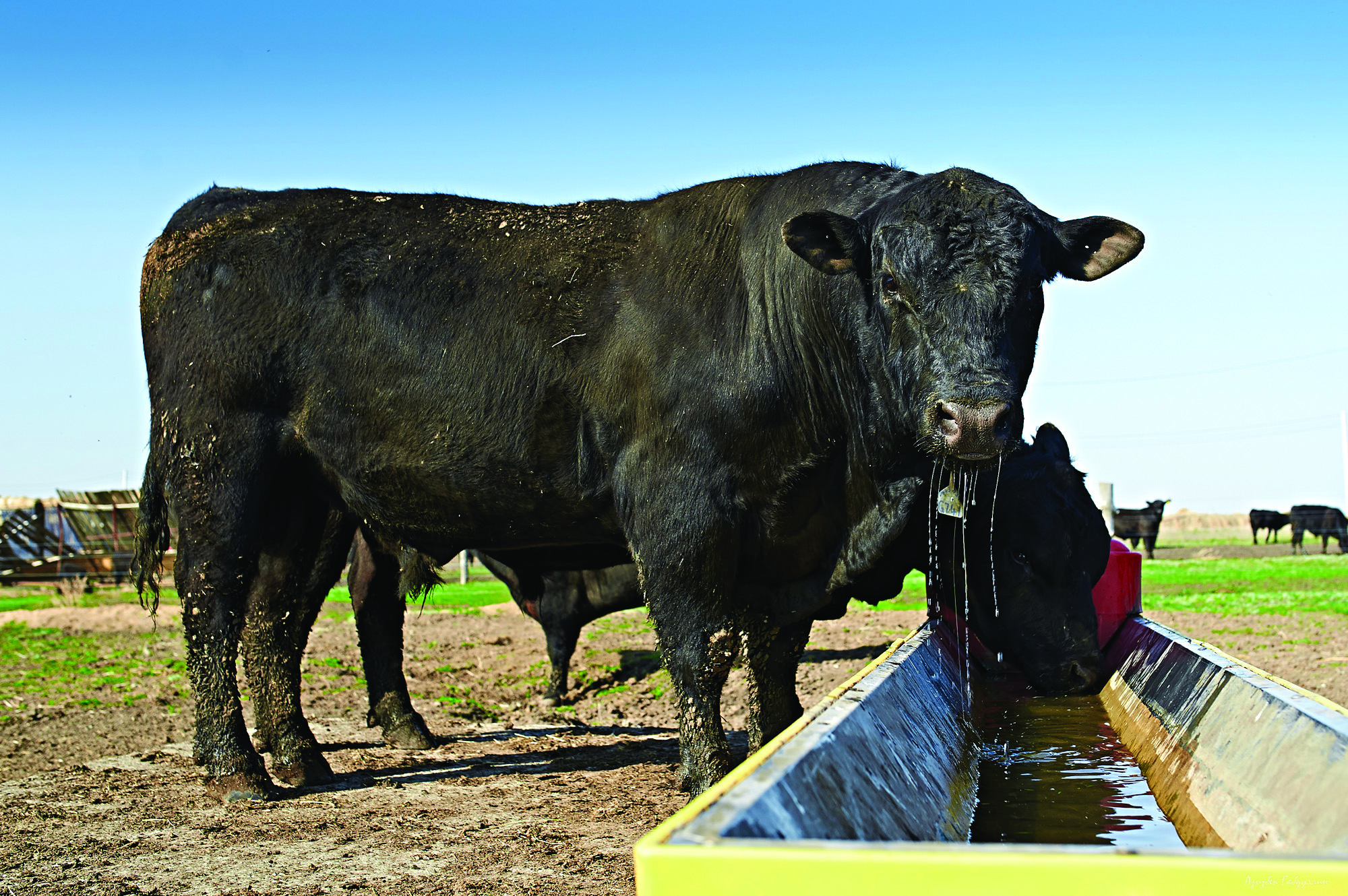
In the End, Efficiency Wins Out
So, is Temple Grandin right, will there be more growth in niche markets with consumers demanding customized production processes? Time will tell but the projected share of retail sales by production claims remains relatively flat. Despite the media hype and attention-grabbing headlines, the market segment has only grown 1.5 percent by sales over the past six years. Producers need to be wary and consider the cost/benefit and production efficiencies in niche markets that can be quickly saturated with supply.
For more information please visit:
Iowa Beef Center – http://www.iowabeefcenter.org/
Rethink the Ranch – https://www.beefitswhatsfordinner.com/raising-beef
Sustainable Beef Production Research at the National Cattlemen’s Beef Association – https://www.beefresearch.org/beefsustainability
Ritchie waterers – https://ritchiefount.com/
The crisp air mixed with a hint of wood smoke and rustling leaves along the trails signal the coming of winter. Wintertime presents challenges and changes to your horse’s nutrition, exercise, workload and water intake. One of the best management practices to ensure a healthy horse is to make sure that they drink enough water.
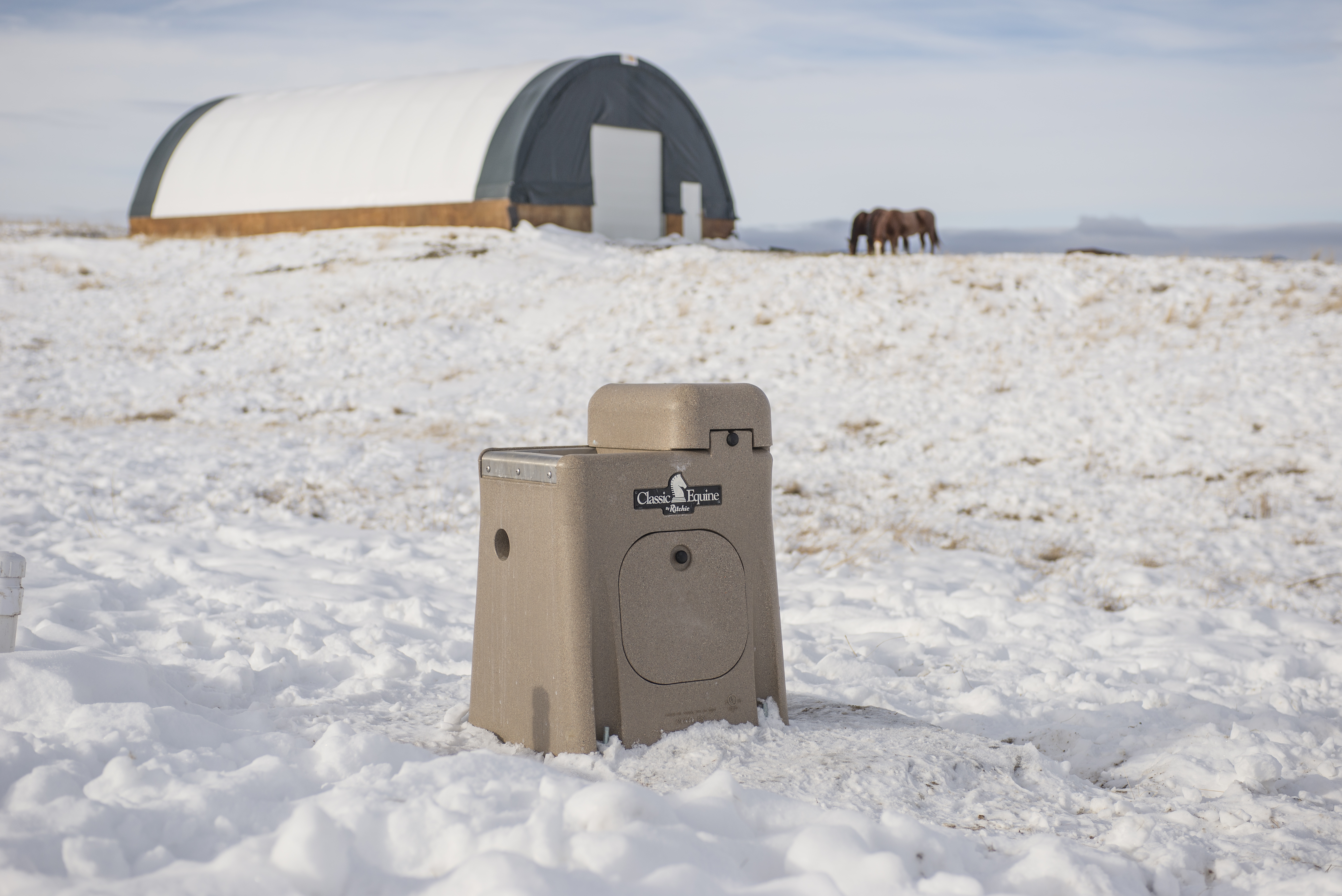
How Much Water?
Water consumption can be easy to overlook. During the warm seasons, horses may have access to pastures with forage that contain 60 percent to 80 percent moisture which goes toward their daily water requirements. Winter feedstuffs such as grain and hay contain less than 15 percent moisture. According to Sarah L. Ralston, DVM at Rutgers University, adult horses at rest who consume 1.5 percent of their body weight in dry feedstuffs will need a minimum of three to seven liters of water per 100 kilograms (220.5 pounds) of body weight a day. A typical 1,100-pound horse will consume four to 9 gallons. If fed only dry hay, water intake will double. Lactating mares and horses who are exercised will need to increase their water consumption by 50 percent to 200 percent.
Each horse is different but in general, mature horses at maintenance should consume between 10 to 15 gallons a day in winter. In addition to monitoring intake, you can do a simple hydration assessment on your horse.
“Feel the horse’s gums, check the capillary refill time (CRT) by pushing a finger against their gums and counting how long it takes for the tissue to go from a pale white color to its normal pink color, and pull their skin away from the body to judge how quickly it ‘snaps’ back into place,” said Laura Petroski-Rose, BMV&S and Kentucky Equine Research staff veterinarian. “Normal parameters for these checks would be moist gums (not dry or tacky), CRT should be less than two seconds, and the skin should snap back into place immediately – about one second.”
Increased Water Intake Helps Decrease Chance of Impaction Colic
Anyone who has gone through the pain and expense of impaction colic or any form of colic knows that an ounce of prevention is worth a pound of cure. Colic is still the No. 1 killer of horses and increasing water intake is still one of the recommended ways to reduce the risk. A horse who is not drinking enough water can begin to experience dehydration and impaction colic in as few as 48 hours.
Hay quality also impacts the risk of colic. In general, stalky hay sometimes called cattle hay is less digestible than leafy varieties. Cattle’s ability to digest stalky grass falls off only 2 or 3 percent compared to leafy grass. Horses on the other hand, experience a 20 percent or more drop off. Horses have a digestive tract that is about 100 feet long and has adapted to a diet of grazing small amounts of grass nearly continuously. This comes into conflict with modern-day management practices and all dietary changes should be monitored for gastrointestinal upsets.
The physical form of the hay also affects water intake. In a digestibility study conducted by Kentucky Equine Research, horses fed alfalfa hay in a long-stem form had significantly wetter feces (81.5 percent versus 75.2 percent) than when an identical amount of the same forage was fed in a pelleted form.
“You always want to feed high quality hay (whether it be alfalfa or grass hay) as this is the best source of protein and nutrients for your horse while also being easier for the gastrointestinal tract to digest.,” said Petroski-Rose. “Low quality hay tends to have thick and tough stems, which the gut is much less efficient at breaking down. Regarding feeding pellets, we are faced with both benefits and disadvantages. The most rewarding times to feed pellets would be in horses with dental or respiratory issues, as these can control some of the factors that exacerbate those diseases. Pellets, however, have been shown to dehydrate the fecal matter in comparison to hay. A way around this could be to soak the pellets in water, which I generally recommend as fast, greedy eaters can experience choke. Additionally, encouraging your horse to consume more water is ideal and having fresh, clean water sources available at all times is imperative.”
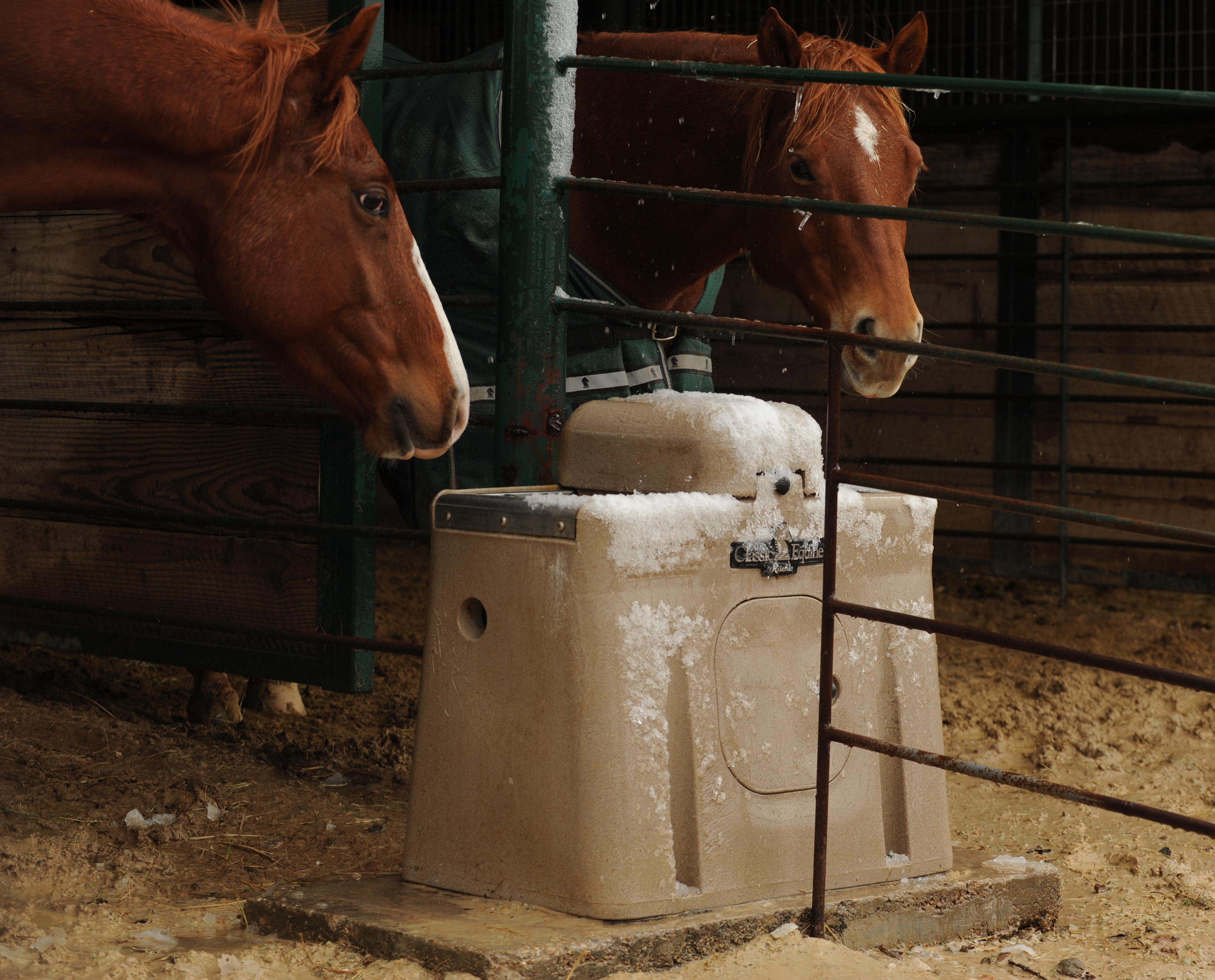
Tips on How to Get Your Horse to Drink More Water
Turn Up the Heat
During the winter horses have a natural tendency to drink less water in colder temperatures so you need to be diligent with providing fresh, clean water at the right temperature.
Researchers at the University of Pennsylvania School of Veterinary Medicine found during cold weather that horses drank almost 40 percent more water per day if they were given warm (45 F to 65 F) water instead of ice cold water. Interestingly, when horses were given a choice between warm and ice water at the same time, they almost exclusively chose the ice water and drank less volume. Keep your water warm and your horse will drink more, it’s that simple.
Use Electrolytes and Supplements
According to Lydia Gray, DVM and staff veterinarian at SmartPak, top dressing your horse’s feed with electrolytes and offering loose salt will help encourage more water consumption. A note of caution about electrolytes, without adequate water consumption further dehydration can occur. Adult horses need 1 to 2 ounces of salt daily. Loose salt is preferred over frozen salt blocks during the winter.
Keep Your Water Clean
Life gets hectic and sometimes cleaning out troughs or buckets is low on the list of priorities, but it is a necessary chore. Small bits of hay, feed or even manure in a bucket or trough is not appealing to any horse. Troughs are notorious for algae growth and leaf/debris decomposition making the water taste bad. Automatic waterers reduce this chore significantly, but they will still need regular cleaning.
Underlying Health Issues Can Impact Water Consumption
The most common issue is diarrhea. Monitoring manure will give you a heads up on how much water is being lost. On the flip side, horses who have drier or less manure production are telling you that they are not drinking enough, and an intestinal blockage or impaction may occur.
Horses with Cushing’s or chronic kidney disease will drink more water than typical.
Don’t forget about the condition of your horse’s teeth. Diseased or sensitive teeth may lead to pain when drinking cold water which in turn leads to your horse avoiding the waterer – offer warm water to entice them.
Easy Solutions for Every Horse Owner This Winter
The easiest and hassle-free option to consider is an automatic waterer. Top of the line waterers feature rugged, insulated polyethylene or stainless-steel units with designs that seal cold air away from the high capacity valves. Options such as thermostatically controlled heat, self-regulated heaters, immersion heaters and digital water meters are typically available.
The best-selling automatic waterers are made by Ritchie Industries, Inc., the company that invented automatic waterers in 1921. The Classic Equine by Ritchie waterers are specifically engineered to meet the rigorous standards that horse owners demand.
“There’s nothing worse than breaking ice or doing maintenance on a waterer when it is freezing outside,” said Tyler Yantis, sales manager at Ritchie Industries, Inc. “The Classic Equine by Ritchie products offer a durable, quality fount that is energy efficient and eliminates the hassle of most common maintenance chores. We have individual stall mount models, portable models and models designed for up to 40 head of horses. We offer digital water meter options on every model to monitor intake because we know how important water is to overall horse health. We have a winter watering solution for every horse farm and every budget. Your horse deserves fresh, clean, temperature-controlled water on demand.”
For more information on Ritchie waterers, visit classicequinebyritchie.com.
The other route to go is to clean and fill buckets several times a day. This can be labor intensive and still would require bucket heaters in cold climates. Larger stock tanks made from structural foam with optional heaters are also another option. Many horse owners avoid floating heaters without guards, especially if they have a rascal in the herd. Playful horses have a knack for tossing the floating heaters out of the tank, leaving you with a large ice block.
Before using any de-icer/heater, make sure to inspect it carefully for worn wires or other damage, and be sure it is working properly. Safety is paramount – the last thing you want is for the horse to experience a mild shock that will scare them away from the water.
Conclusion
Good wintertime horse management means providing your horse with an ample supply of fresh, clean water at all times. Remember horses will not break ice to drink. It is best practice to provide water at a temperature between 45 F and 65 F to encourage adequate water consumption. Monitor water consumption to reduce the risk of impaction colic and if any problems arise, consult your veterinarian.
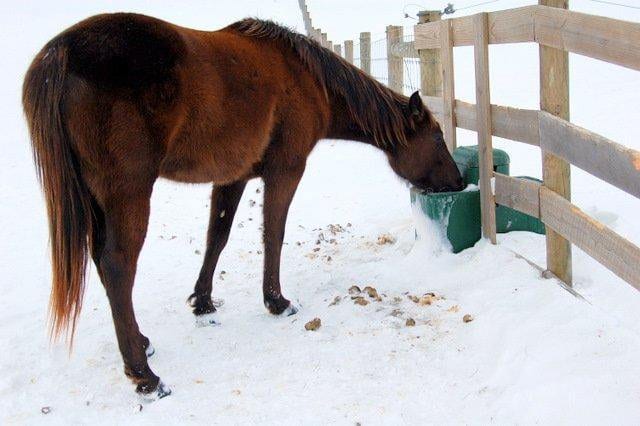
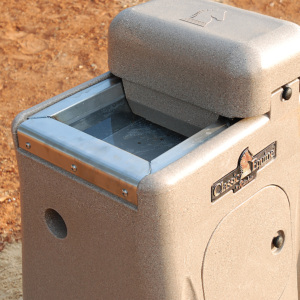
In the attempt to solve any problem, it is inevitable that the solution will create a new problem. The art of good solutions is predicated on the new problem being more manageable or preferable to the original problem to which the solution was applied.
When we are talking about the methods, means and practical functions of keeping our animals hydrated, the problems and solutions create interesting scenarios that stress the best solution architects.
Water Source
Starting at the source is a wise idea. The most common source is surface water.
Surface water is a widely used source to provide water across the globe. Thousands of animal owners use the water that naturally exists on their property or will dig their own pond or reroute streams. The problem with surface water as your primary source is that it is far too often contaminated by the chemical runoff of the surrounding land. The higher concentration of chemicals, the more health issues will surface with your animals. The level of bacteria, viruses, protozoa, algae, and minerals present in surface water is typically higher than other sources. Contamination and stagnation are usually detected far too late so waterborne illnesses are more common with animals with surface water as their only source.
Surface water sources are also dependent on rain or on naturally occurring springs to provide a steady source. Drought, evaporation and water tables all vary and can leave you with a depleted source and this could occur rapidly. Flood and runoff also create a dilemma for relying on surface water alone as your source. The climate also affects this source. In warmer months the temperature can be a deterrent too.
On the positive side, surface water is the least expensive and is energy free.
Rainwater collection or rain harvesting is another source. This is not a new source but there is a popular movement to include this is in your strategy. While there are other reasons to consider this method, as a primary solution for watering animals it is an expensive source and does not solve many problems that animal owners face. If you are utilizing this source other reasons, then this can be a solution for you but it requires a large amount of planning, work and monitoring to make this a viable method of watering.
Well, municipal and community water or pressurized water supply. This is the most convenient source and the most prolific for watering animals. Pressurized water supply allows for faster recovery, diversity of trough placement, easier volume monitoring. These sources typically do not have the contamination factors that lead to health issues. This is not a perfect source and there are places where the well and or municipal source has a Ph balance or high mineral levels that need to be considered.
Water Temperature
We touched on it above when discussing surface water, but water temperature is an important element of your hydration strategy. While most have thought of the reality of freezing temperatures, warm temperatures also pose problems. In the warmer months there is a higher occurrence of algae growth, bacteria, and viruses. In hot climates, the water temperature reaches a point where the animals will not fully hydrate.
 In cold climates, the reality of freezing is something most are aware of. With freezing, it usually means an increase in labor and a most uncomfortable performance of your normal duties. If your habit is to fill buckets, fill troughs or “turn on” a source. Getting out in the elements is painful when it is 20º below zero. Breaking ice and dealing with busted hoses also creates a labor issue that far too many horse owners are familiar with.
Extreme cold water has a similar effect as extreme warm water. The animal tends to not fully hydrate. The goal is to have moderate water temperatures year round. Minimizing the volume of the immediate supply is a wise move in keeping the temperature within an optimal range. Choosing the right trough is the logical next step.
Troughs
All troughs are not equal. Large volume troughs, whether they are galvanized metal or rubber, are prone to become an algae factory. These troughs require regular cleaning and that is not easy and thus often ignored (I am guilty of procrastination). In cleaning these troughs there are several elements that lead to waste. To properly clean, all of the existing water must be removed and then replaced. Removing the algae and debris is difficult and time-consuming. Non-Insulated troughs degrade rapidly and are far too often used beyond their ability to function well.
Small troughs require multiple fills a day but are much easier to clean. For those who utilize pastures for most of the year, small passive troughs are not an option. With large troughs and passive troughs, the cleaning agents used to clean also need to be considered. The use of bleach for regular cleaning is a toxin. Many of the algae killing chemicals on the market are also toxic or lead to digestive issues which can cause dehydration.
Automatic troughs provide a solution that solve many of the problems that other troughs fail to remedy. The use of small volume automatic waterers is a solution for those who have pressurized water access. The small volume and demand feature of an automatic water is a solution that benefits all herd sizes and pasture configurations.
Conclusion
At Ritchie Industries, we have been dedicated to manufacturing waterers that are good for the animals, the animal owner and the environment. Considering all of the problems and options available to providing quality water to your horses we believe that we have the best resource for the most challenging scenarios. Whether you have one horse or 150, we have a watering solution that solves the problems outlined above.
Good resources:
http://equusmagazine.com/article/water_quality_082809?ctid=2
http://www.equinews.com/article/water-quality-for-horses
http://www.equinews.com/article/cleaning-horse-feed-tubs-and-buckets
http://www.sites.ext.vt.edu/newsletter-archive/livestock/aps-98_12/aps-1005.html
In this post, you will find a series of useful steps that will help you prepare your waterer for winter to ensure your animals can enjoy fresh water every day.
Prepare your Thrifty King for Winter
Our Engineer Ed features several steps you can take to prepare for winter in the following YouTube video.

Freezing Climates – Optional Heat Protection
Ritchie Thrifty King Series units do not come standard with heat however, if you live in an area where temperatures reach freezing or below or if your situation does not qualify for energy free usage, the additional heater will be needed. Follow the steps below to ensure proper function of your existing heaters.
How to test your Immersion Heater
The best time to test your heaters is now, when the weather is warm. After-all, replacing parts in the middle of winter is something we want you to avoid. To test the heaters follow the steps below.
Removed Heater
We recommend that the immersion heater is removed during the warmer months to elongate the life of the heater. If this has been done you can test the heater two ways.
- Plug the heater into a wall socket and immerse into a bucket of ice water. This will trigger the thermostat and the heater should turn on.
- Place heater in a freezer for 10-15 minutes. Once cold to the touch, remove and plug into a wall outlet. This should trigger the thermostat and turn the heater on.

Installed Heater
If the heater has remained in the trough during the summer, clean heater of deposits that may have accumulated, ensure that the electricity is on to the unit and immerse in a bucket of ice water to trigger the thermostat. The heater can be removed and follow the steps above.
If your immersion heater is not becoming noticeably warm to the touch a new heater will need to be purchased. Heaters can be purchased through a local dealer, online, or direct at 800-747-0222.
NOTE: If you live in an area that has long periods of freezing temperatures and you are not set up for energy free usage, a Self Regulating Heat Cable is strongly recommended to protect your valve and waterline from freezing. These heaters are extremely reliable and will need to be checked once the temperatures reach below 40 degrees Fahrenheit.
General Winter Maintenance and Warm Climates
- While the following tasks may seem minor, they have the potential to make a significant difference in the performance of your waterer.
Check the all-weather sealant around the base of the unit and the concrete pad to ensure no gaps have formed that would allow air to penetrate the underside of the unit. Replace the all weather sealant if needed. - Verify that the waterline is not touching the side of the riser tube or side of the unit. Frost has the ability to travel from one object to the next. Centering your waterline will prevent frost from potentially freezing your line.
- The Thrifty King series has a water seal groove along the top of the red valve chamber and in-between the red cover and the yellow base. This groove is intended to hold water during the winter which will freeze the covers down during the winter. This will create a firm seal against the cold and the wind. Fill this groove with water and for easy lid removal, spray the underside of the cover with a cooking spray.
- Clean the waterer. Cold winter weather makes cleaning a very cold chore. Cleaning your waterer ahead of time will help to provide fresh water throughout the winter. Watch the video below on how to clean your Thrifty King series waterer.