

When the temperature drops, so can your horse’s water intake — and that’s a problem you can’t afford to overlook. Proper hydration is important to a horse’s digestion, temperature regulation, joint lubrication and cellular function. And dehydration in winter is a serious risk, even though it’s not hot outside. Cold weather changes how horses drink, so they need a little help to ensure they’re still getting enough fresh, clean water every day. We talked to the experts and have three key ways to help your horse stay hydrated all winter long.
1. Warm water keeps horses hydrated in winter.
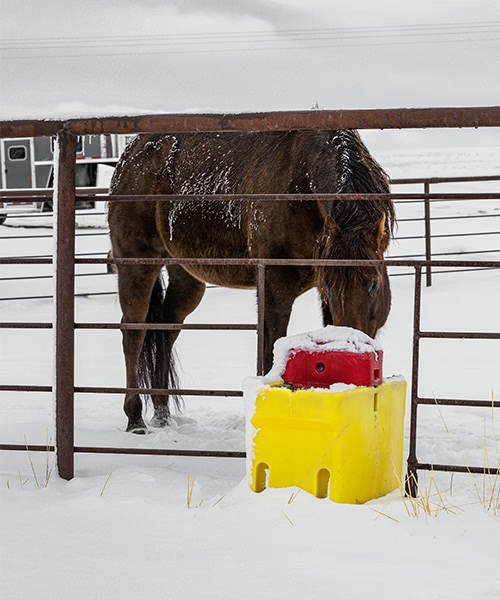 Horses have a natural tendency to drink less water in colder temperatures. And the temperature of their water can greatly influence how much they drink. If given the choice between warm water and cold water, horses will choose the cold water — but they will consume less of it. Researchers at the University of Pennsylvania School of Veterinary Medicine found that horses drank almost 40% more water per day during cold weather if they were given warm (45°F to 65°F) water instead of ice-cold water.
The message here: Don’t let your horse make the call. Keep water sources warm in winter for better hydration.
2. Electrolytes and loose salt help horses drink more water in winter.
If your horse is not drinking water in winter, you can top-dress feed with electrolytes and offer loose salt to help encourage them to drink more water, according to Lydia Gray, DVM and staff veterinarian at SmartPak. Adult horses need 1 to 2 ounces of salt daily, preferably loose salt rather than frozen salt blocks during the winter. Supplementing with electrolytes to improve hydration is a balancing act. You must ensure your horse is drinking enough when you’re supplementing with electrolytes or dehydration could become worse.
3. Winter hydration starts with clean waterers.
When life gets hectic, cleaning out troughs or buckets can fall to the bottom of your list of priorities. But this is a critical chore, especially if your horse isn’t drinking water in winter. Horses prefer clean, fresh water and may refuse to drink if small bits of hay, feed or even manure are floating in their water. Plus, trough waterers are notorious for algae growth. That, and decomposing leaves and debris, makes the water taste bad. While they still need regular cleaning, automatic waterers can make this chore a lot easier and ensure delivery of fresh, clean water.
Learn more about how Ritchie automatic waterers can help you keep your horse hydrated through the winter — and the entire year.
Winter hydration isn’t just important — it’s essential to your horse’s health and well-being. By offering warm water, supplementing with electrolytes and loose salt, and keeping waterers clean, you’re tackling the top reasons your horse is not drinking water in winter. These small but impactful steps can help prevent dehydration, support digestion and keep your horse feeling their best all season long.
Water is the most important nutrient for your cattle. And like you, they prefer it clean and fresh. Ideally, cattle prefer water temperatures between 37°F and 65°F. But in winter, warmer is better. Cold water can chill the rumen, which runs around 102°F. That can slow digestion until the water warms to body temperature. Keeping water accessible and at a comfortable temperature helps keep intake and performance on track, even when the weather isn’t.
Ohio State University Agriculture and Natural Resources Extension Educator Ted Wiseman explains, “Although water is the cheapest nutrient we may purchase or provide, it is the one we provide the most of on a per-pound basis. For example, for every pound of dry matter consumed, cattle will need to drink about 7 pounds of water. With colder temperatures, feed intake is increased to generate body heat. Decreased water availability reduces feed intake, which results in decreased body condition, poor fetal growth rates, and lactation levels.”
What type of waterer is best for my cattle in winter?
“I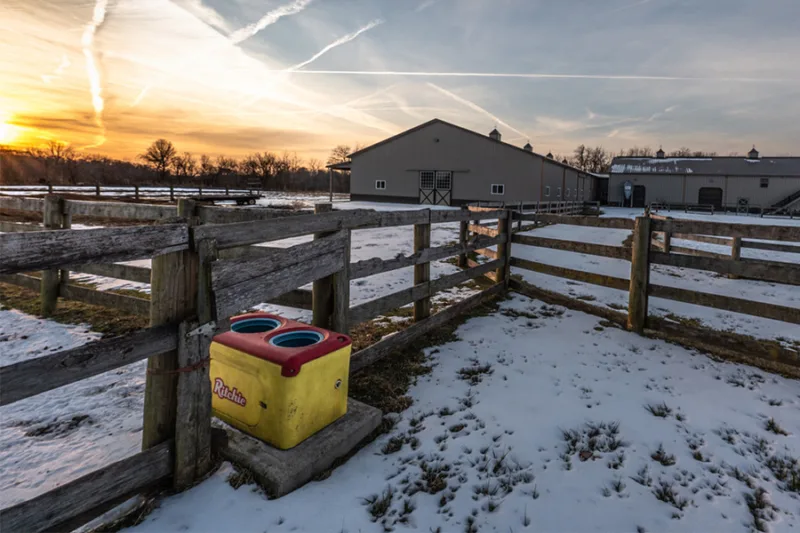 f given a choice of water sources, cattle do prefer to drink from a tank instead of streams or ponds,” said Wiseman. “In a few studies that looked at this, cattle were given access to both with no restriction to stream or pond access. In both studies, cattle preferred to drink from tanks 75% to 90% of the time.”
Over the years, beef producers have tried just about every water setup out there. But time and again, a good automatic waterer proves its worth. It cuts down on chores and maintenance costs and it helps cattle stay healthy and gaining.
How can I keep my cattle’s water warm enough in winter?
If you don’t have optional heating units on your waterers, it’s time to install some! If you do have heaters, inspect them to make sure they’re running well and are not damaged.
For immersion heaters:
- Plug in and turn on the breaker to the immersion heater and/or heat cable after it is installed and underwater.
- Chill the water with ice to activate the built-in thermostat. Or, you can test your immersion heater by placing it in a freezer for 10 to 15 minutes and then plugging it in without placing it in water. Either way, the heater should be warm to the touch within 15 seconds if it is working properly.
For built-in thermostatically controlled heaters:
- Simply turn on the power to the unit and fill the drinking areas with ice to activate the thermostats. If the ice melts away, your unit is operating properly.
What if my heating elements aren’t working?
For immersion heaters:
- If your immersion heater is not becoming noticeably warm to the touch or if there is damage to the cord or wires, you will need a new heater.
For built-in thermostatically controlled heaters:
- If the ice you put into your unit’s heated drink area isn’t melting, you most likely have one of two problems. If it’s only melting on one side, the heater on the other side might be out and probably needs replacing. If none of it melts, your thermostat could be the issue, or the unit might not be getting power at all. If you think it’s electrical, it’s best to call an electrician to take a look.
- Self-regulating cable heaters don’t get hot to the touch, so it’s normal if they feel cool. To check if they’re working, you’ll likely need a voltage meter or help from an electrician. If this part goes out in winter, you’ll probably still see ice-free drinking areas, but no water will come from the valve.
What else should I do to prepare my waterers for the winter?
No matter how big your herd, keeping your waterers running right comes down to a few simple maintenance checks. A little time now saves you a lot of hassle later.
Clean the valve chamber and drinking areas.
Remove the covers and give the troughs and valve chambers a quick scrub with a brush or sponge to clear out any dirt and debris that’s built up. Don’t forget to check around the immersion heater. If it’s been sitting in water nonstop, it can collect deposits that lower performance over time.
Check all water seals.
Quality automatic waterers, like those from Ritchie, use water seals that can hold water or vegetable oil in their sealing tracks to help lock down the covers in cold weather. That seal keeps the cold air out and protects your valve system. But if those tracks are full of dirt or debris, they won’t seal right. That’s when trouble starts. If cold air gets in, your valve system could freeze up.
Inspect the all-weather sealant.
Look at the sealant around the base of your unit where it meets the concrete pad. If there are any gaps, cold air can sneak in underneath. Replace it if needed. And before winter hits, check inside to make sure no critters have moved in or done any damage.
Prepare for winter to make your life easier.
“There’s nothing worse than breaking the ice or doing maintenance on a waterer when it is freezing outside,” said Robert Amundson, President and CEO at Ritchie Industries, Inc. “We offer a full line of durable, quality cattle founts that are cost-effective, innovative and backed by the best warranty in the business. It is our mission at Ritchie to provide fresh water for life.”
With a little maintenance and a good winter prep plan, you can keep fresh water flowing all season long — and your cattle healthy and gaining. If you’re not already using a quality automatic waterer, it might be time to make the switch. Ritchie invented automatic waterers back in 1921 and continues to lead the pack with some of the best-selling units on the market.
Consumers are increasingly interested in how their food is produced. They want to know who produces it, how animals are cared for and the impact on the environment. In a survey of 1,000 American consumers, 70% of respondents reported paying attention to labels that indicate how the animals were raised and 78% believed there should be an objective third party to ensure farm animal welfare.1
A 2020 dairy consumer survey revealed that almost half of the respondents would purchase more products from companies that make animal welfare a core part of their business philosophy, and about three-quarters would pay a premium for these products.2
Dairy farmers have been proactive in this area, with more than 99% of the U.S. milk supply coming from farms that participate in the National Dairy Farmers Assuring Responsible Management (FARM) Program.3 One of FARM’s highest priorities is animal care. Ensuring cow comfort has become a top priority at many dairy farms, and beef producers are following suit.
How does cow comfort affect dairy and beef production?
Cow comfort isn’t just a consumer preference, either. Comfort is important to the overall health and well-being of cows, and that affects reproductive efficiency as well as milk production and beef gain.
Effects on dairy productivity
One study on cow comfort revealed that improved cow comfort can lead to greater milk yield, with increases ranging from 3 to 14 pounds per cow per day.4
Effects on beef productivity
According to Iowa State University Extension and Outreach Beef Specialist Beth Doran, comfortable cattle perform better and, consequently, are more profitable. And comfortable, stress-free cattle result in beef that’s more tender and juicy, important qualities for consumer satisfaction.5 Ensuring cow comfort by providing shade and limiting feeding during heat stress conditions led to a 7% increase in daily gains and a 4% improvement in feed-to-gain efficiency.6
Effects on calves
Researchers have also proven that a healthy start to life has positive effects on a calf’s entire life from pasture to plate. And that’s related to cow comfort. For example, anything producers can do to keep a calf warm and dry at the beginning of life can help improve its colostrum intake and its ability to absorb immunoglobulins within the first 24 hours, setting it up to thrive.7
How can I improve cow comfort on my operation?
Here are nine ways to improve the comfort of your cattle:
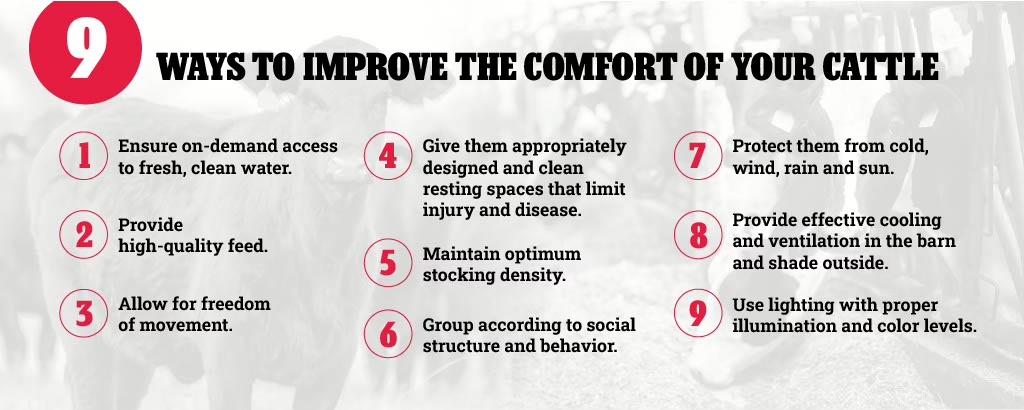
- Ensure on-demand access to fresh, clean water.
- Provide high-quality feed.
- Allow for freedom of movement.
- Give them appropriately designed and clean resting spaces that limit injury and disease.
- Maintain optimum stocking density.
- Group according to social structure and behavior.
- Protect them from cold, wind, rain and sun.
- Provide effective cooling and ventilation in the barn and shade outside.
- Use lighting with proper illumination and color levels.
Hydration is key to cow comfort
Hydration plays a big role in keeping cows comfortable and healthy. Water helps them regulate body temperature, improves feed intake and digestive function, and contributes to a stronger immune system. And it’s crucial to productivity.
Milking cows drink between 30 to 50 gallons of water per day to produce nutrient-packed milk. For beef cattle, water intake is positively correlated with average daily gain and feed intake.8 According to University of Nebraska-Lincoln publications, beef cattle need about 1 gallon of water per day for every 100 pounds of body weight, given average production conditions.9
“I always tell my clients that water is the most essential nutrient because without access to good, clean, fresh water you will limit the animal’s ability to perform,” said Dr. King Hickman, D.V.M., and founding partner of GPS Dairy Consulting in Sheldon, Iowa. “You want to make sure that you are testing the water periodically to make sure it’s not high in sulfates, nitrates, manganese or iron to ensure good water quality. Another issue I see most commonly is not providing enough water space for the size and capacity of the pens, and the waterers may be undersized. A simple rule of thumb is to plan for two linear inches of water space per lactating cow. You need to have enough space around your water troughs so that the animals can get a drink while other animals can still pass through and the area doesn’t become a bottleneck.”
“Waterers that don’t perform well, meaning they aren’t filling quick enough, can negatively impact milk production,” said Dr. Hickman. “You need enough water pressure and enough flow to meet the water demands of your cattle. Think about a water fountain that you or I might drink from where the water just barely dribbles out and you have a hard time getting enough water at one time. Or think about a water fountain that has too much pressure and the water just shoots out of the bowl. The availability of enough water for your animals is crucial to prevent subclinical dehydration in dairy cattle.”
Choose automatic waterers that contribute to well-being
Concrete and polyurethane waterers (with or without stainless steel troughs) are the two main types of waterers on the market. You can find options that include insulation, heating elements and constant flow valves.
“Whether you are looking to install new construction or upgrade your waterers, it is important to consider how they fit into the overall facility design and how that impacts the comfort of the cows,” said Ritchie Industries Sales and Marketing Manager Jeff Miller. “Compare how fast they refill, how durable the units are, maintenance requirements, warranty coverage, and how easy they are to clean. For over 100 years, Ritchie has been made in America, and we produce the fastest energy efficient founts in the industry. We have expertly engineered valves to serve any water pressure environment, and your cows won’t be able to outdrink a Ritchie,” he added.
“Every single Ritchie fount meets all Grade A dairy requirements, and our entire product lineup has been designed with animal safety and comfort in mind. All our stainless-steel troughs have hemmed and smooth edges and our poly units have smooth, curved surfaces. Our poly units are also 75% more efficient than comparable concrete units and they won’t pit. Plus, we offer several models that may qualify for utility incentives in numerous states. It all adds up to a more efficient, clean and comfortable drinking environment,” said Miller.
The bottom line: A comfortable cow is a productive cow
Cow comfort is key to raising healthy and happy cows that rest, exercise, eat and drink at a level to optimize production. Operations that prioritize cow comfort pay attention to every little detail, and that pays big dividends. Take steps to improve your cows’ comfort and see the benefits to their well-being and your operation’s profitability.
References
1 Spain, C. V., Freund, D., Mohan-Gibbons, H., Meadow, R. G., & Beacham, L. (2018, July 25). Are they buying it? United States consumers’ changing attitudes toward more humanely raised meat, eggs, and dairy. MDPI. https://www.mdpi.com/2076-2615/8/8/128
2 Adams, C., Lieberman, M., Maluf, I., & Paula, R. U. de. (2021, May 12). How the COVID-19 pandemic has changed dairy preferences among us consumers. McKinsey & Company. https://www.mckinsey.com/industries/agriculture/our-insights/how-the-covid-19-pandemic-has-changed-dairy-preferences-among-us-consumers
3 Animal care. National Dairy FARM Program. (2024, September 4). https://nationaldairyfarm.com/dairy-farm-standards/animal-care/
4 Cook, N.B. 2006. Extreme makeover: Freestall edition. Proc. of the VitaPlus Dairy Summit, Lansing, MI.
5 Doran, B. (n.d.). Comfortable cattle provide better quality beef, more profit. News. https://www.extension.iastate.edu/news/comfortable-cattle-provide-better-quality-beef-more-profit
6 DeBord, Z., Blasi, D., & Tarpoff, A. J. (2023, June). The effect of shade and limit feeding on cattle comfort, water consumption, and efficiency during the receiving and backgrounding phase. Beef Research. https://www.beefresearch.org/resources/beef-sustainability/project-summaries/sustainability-project-summaries-by-category/environmental-sustainability-summaries/the-effect-of-shade-and-limit-feeding-on-cattle-comfort-water-co
7 Catering to cattle comfort pays off in performance. https://hereford.org/static/files/0212_Comfort_Performance.pdf
8 Holter, J. B., et al. (2011, April 20). Water intake and factors affecting water intake of growing beef cattle. Livestock Science.https://www.sciencedirect.com/science/article/abs/pii/S1871141311001375#:~:text=Consumption%20averaged%2029.98%20%C2%B1%208.56,no%20relationship%20to%20feed%20efficiency.
9 Harrison Dudley. (2017, August). Water for beef cattle. NC State Extension News. https://beef.ces.ncsu.edu/water-for-beef cattle/#:~:text=University%20of%20Nebraska%2DLincoln%20publications,gallons%20of%20water%20a%20day.
Water is a precious resource that is essential for all living things. It is startling that only 2.5% of the Earth’s water is freshwater and of that percentage only 1.3% is from surface water sources like lakes and rivers. Groundwater makes up 30.1% of freshwater sources and the remainder is frozen in glaciers and ice caps. It is no wonder then that water usage and conservation continues to be a hot topic for horse owners everywhere. Drought conditions are expected to persist and worsen in the Western U.S. this spring and the long term forecast doesn’t show much improvement. While we can’t change the weather, we can implement some simple management practices to help conserve water on the farm, ranch or stables. Early summer is the perfect time to consider these four simple steps.
Step One: “Green” Your Landscape – Compost. Mulch and Plant Native Species
A 1000-pound horse will produce approximately nine tons of manure over the course of a year. According to the Rutgers University Cooperative Extension Service, a ton of horse manure will contain roughly 11 pounds of nitrogen (N), two pounds of phosphorus (P), and eight pounds of potassium (K). Composting your horse’s manure takes three to six months and the process kills most parasites, pathogens and weed seeds. Composting is also an excellent way to boost your soil’s productivity.
“Compost is going to absorb and retain moisture,” said Alayne Blickle, director and owner of Horses for Clean Water – a nature-based solutions for horse keeping business based in Nampo, Idaho. “If you spread the compost on pastures, lawns, gardens then you don’t have to water as frequently. Using mulch in your landscaping will reduce evaporation on the soil surface and retain soil moisture. If you use a lot a bedding, it’s possible that you could use that straight from the stalls as mulch around landscaping.”
Blickle keeps her training current in the areas of sustainable agronomy, natural resource management, rangeland ecology, and equine science. She holds undergraduate degrees in psychology and biology and a graduate degree in communications.
When it comes to keeping your farm or ranch looking beautiful, Blickle suggests that native plants be used in flower beds and landscaping. Native plants will require less herbicides, pesticides, fertilizer and water to thrive in your landscape. She also encourages horse owners to consider implementing pollinator habitats on their properties.
Step Two: Practice Good Pasture Management – Rotate, Water Deeply & Infrequently and Reduce Run-Off
If you have irrigation installed in or around your pasture, it is recommended that you water deeply and infrequently to promote deep root growth. Deeper roots will help your pasture withstand drought and develop disease-resistance.
“Watering plants in the evening is encouraged because it is more efficient and you have less evaporation,” said Blickle. “You can use various kinds of irrigation systems like soaker hoses or drip irrigation. We want horse owners to get the water to a depth of about five to six inches in the soil of the pasture. The best way to figure out if that is happening is to push in a shovel blade or even a long handled screwdriver into the ground. If it slides into the ground easily, then you are good. But if the shovel or screwdriver can’t go into the ground, then (more) irrigation is needed.”
Develop a rotational grazing plan to help limit areas that get overgrazed. Overgrazed pastures can result in compacted soil which reduces water infiltration and increases run-off.
“Swales and native plant buffers are great at absorbing water run-off and letting it soak back into the ground to recharge your groundwater aquifer,” said Blickle. “This will reduce sediments from the soil being washed off into surface waters. Let the plants absorb it, they’re putting it back into the ground and into the natural hydrology.”
Step Three: Install Automatic Watering Systems
Automatic waterers are a key component in reducing water usage and waste. Automatic waterers conserve water by providing only as much water as the horse can drink at any given time.
“I always recommend that horse owners choose an automatic watering system that has a 5 gallon or less pan (trough) to water their horses,” said Blickle. “This also makes it easier to clean because you only have a small pan to clean and rinse, instead of dumping and scrubbing a 50 gallon stock tank. You don’t have to clean an automatic waterer as frequently either because the water is circulating. Since the water is moving and not stagnant, it means that your waterer won’t give mosquitoes a habitat to grow in. That’s especially important when it comes preventing or reducing the West Nile virus.”
Cost Share & Rebates May Be Available for Automatic Waterers
Whether it is due to water conservation, energy efficiency or West Nile virus/mosquito prevention, there may be cost-share programs available through your local conservation district or natural resources agency that will reduce the cost of installing automatic waterers. Visit the National Association of Conservation Districts at www.nacdnet.org to find your local district. In addition, many local electric cooperatives offer rebates or incentives on high efficiency automatic livestock waterers such as Ritchie EcoFount, OmniFount, WaterMatic, Thrifty King, WaterMaster and Classic Equine waterers. Rebates can range from $40 to $500 per unit, depending on your co-op’s program. Check with your local rural electric cooperative to find out more.
“I am a huge fan of automatic waterers because of the water conservation but also because they are so chore efficient,” said Blickle. “It is a little bit more work upfront but then you don’t have hoses you are dragging around, no more frozen hoses, no more frozen pipes in the winter. You also don’t have to worry about colicky horses because somebody forgot to give them enough water and the expensive vet bills that go with it. I have all but two paddocks at (Sweet Pepper Ranch) that have Ritchie automatic waterers and I just can’t wait to get those stock tanks changed over to automatic waterers. Cleaning the stock tanks is back breaking work, they are heavy and the water doesn’t stay clean for very long. There is always so much work to done on a horse property that you need to be efficient with your time and choose your battles. That’s why I am such a huge fan of automatic waterers.”
Step Four: Capture Water Through Roof Run-Off with Rain Barrels & Cisterns
Install rain gutters and roof run-off systems on all barns and sheds to capture rainwater into rain barrels or cisterns that can be used for non-potable activities such as watering the garden or cleaning stalls. Blickle cautions horse owners about using roof run-off in stock tanks because materials from some roofs can contaminate the water and be harmful to your horses.
Capturing the water during the rainy season has the added benefit of reducing mud in high-traffic areas.
“Out here in the high desert of Southwestern Idaho we only get about 10 to 12 inches of rain annually,” said Blickle. “The problem is that most of the rain comes in the winter or spring and not in the summer when we need it most. So, it is important to have water storage systems like a cistern that can hold the roof run-off. Then, if you have a pump or gravity system you can utilize that water all throughout the year.”
Final Thoughts
Freshwater is a finite resource and as responsible land and horse owners; it is critical that everyone take steps to conserve and preserve our water. These four simple conservation improvements and upgrades will add efficiency and value to your property as well as provide a healthy environment for you and your horses.
“If you don’t like the weather in New England now, just wait a few minutes.” – Mark Twain
Insert the name of your location above and this simple quote rings true for most of us throughout the country. The barn environment can go from pleasant, to frozen to dusty to flooded in a heartbeat. Horse owners, cowboys and ranchers routinely deal with unpredictable weather that can turn a chore like the watering the horses into a battle royale with the elements. Planning today to secure your water supply from future weather events and emergencies can go a long way towards keeping you and your horse healthy and happy.
Water is the Most Essential Nutrient in Your Horse’s Diet
According to Kentucky Equine Research, idle horses in a moderate climate will drink between 5 and 15 gallons of water a day. Horses on lush pastures may consume less because their forage contains 60 to 80 percent moisture, conversely horses eating hay that contains 15 percent or less moisture will need to drink more. Horses generally drink two quarts of water for every pound of hay consumed. Water should always be provided as “free-choice” so the horse can drink throughout the day. Horses who do not drink enough water can begin to show signs of dehydration and impaction colic within 48 hours.
Hot Weather Water Issues – Temperature and Mosquitos
Providing a source of cool, clean, fresh water is a cornerstone of good management practices in warm weather and warm climates throughout the year.
“We have several Ritchie waterers in operation on our University of Georgia Tifton Campus Animal Science Farm, specifically at the Blackshank Grazing Paddocks as part of the Better Grazing Program,” said Jennifer (Johnson) Tucker, Ph.D., Assistant Professor of Animal and Dairy Science at the College of Agricultural and Environmental Sciences at the University of Georgia. “While we aren’t collecting data on the performance of the waterers specifically, we do have permanent waterers installed at the location to allow producers [sic] to see these technologies in use. All of the permanent waterers have the frost protection feature, although this far south we are less concerned about freezing. We do see that the ball/floating thermal cap waterer type tends to keep the water cooler for the animals, which is a big plus in this very hot environment.”
Your water supply and water use also can play a critical role in helping to reduce the disease risk from arboviruses, primarily spread by mosquitoes, such as Eastern equine encephalitis (EEE), Western equine encephalitis (WEE), Venezuelan equine encephalitis (VEE) and West Nile virus (WNV). These diseases cause major neurological symptoms, including death. It is important to note that horses cannot transmit these diseases to other horses, humans or birds. They are only transmitted through mosquito or other blood sucking insect bites.
WNV is the leading cause of arbovirus encephalitis in horses and humans in the United States. Since 1999, more than 27,600 cases have been reported in the U.S. with an average case fatality rate of 30 to 40 percent. While WNV is certainly dangerous, the triple threat of EEE/WEE/VEE looms large over the equine industry.
“EEE is by far the most prevalent among the EEE/WEE/VEE arboviruses in the U.S.,” said Nathaniel “Nat” White, DVM and Director of the Equine Disease Communications Center. “EEE is primarily confined to areas east of the Mississippi River. Last year in 2020 most of our cases came from Florida, Massachusetts, Michigan, Wisconsin and some in Canada. Birds are the reservoir for the virus and mosquitos get blood from the birds with the virus and then can pass it on to the horse through a bite. These arboviruses are common in the spring and summer, with cases typically peaking in late summer. There has not been a case of WEE in the United States for several years and there have been no cases of VEE since 1971. All horses are at risk for EEE but younger horses from one to five years of age seem to be the most vulnerable. EEE has a mortality rate between 75 to 95 percent, so this is a very serious disease that horse owners should take steps to prevent.”
The two biggest management practices you can do to reduce your horse’s risk of contracting an arbovirus are vaccinations and mosquito control.
- Vaccinations
The good news is that there are vaccines for all the arboviruses and they are highly effective at preventing the diseases. You should contact your veterinarian to discuss a proper vaccination plan that factors in your climate and the risk to your horses. You can also subscribe to the Equine Disease Communications Center (EDCC) for email alerts at EquineDiseaseCC.org or download the “EDCC Disease Alerts” app for Apple and Android phones to be alerted about all reported infectious equine disease in North America.
- Water and Water Use Mosquito Control
It is common knowledge to reduce standing water sources (buckets, wheelbarrows, debris, etc.) to take away mosquito breeding grounds but it is also important to reduce “sneaky” standing water sources. Hoses, hydrants and water troughs that leak, improperly graded drainage ditches and clogged gutters are a few easily forgotten sources of standing water that need to be accounted for.
If you are not using an automatic waterer, it is critical that you change out your horse’s water regularly. It only takes 8-10 days for mosquitos to go from eggs to fully biting adults. If you are finding yourself dumping out a lot of water to manage the mosquitos or to keep your water clean, it might be time to consider an automatic waterer to reduce your water use.
“On our horse training property in Stephenville, Texas, we have all Classic Equine by Ritchie waterers and they just take the worry and stress out of keeping our horses’ water cool, fresh and clean in the summer,” said Billie Bray, noted Western equine sports marketing figure and Chief Marketing Officer for Equibrand Corporation. “If you are in an environment where bugs and mosquitos are a major problem, you can consider other Ritchie models in the farm line that use the floating thermal caps, where your horse pushes down on the ball to access the water and then the ball goes back up. The water stays cool and crystal clear year-round, no matter where you live and it’s perfect. We tested one of these at our first place and it was just the most amazing thing. Every time we checked the water it was absolutely, perfectly clean because the sun never touched it.”
When Cold Weather Strikes, Water Intake Can Be Sharply Reduced
Cold snaps can be difficult to deal with and the biggest concern is that your water source will freeze. However, cold weather in general can drastically affect how much water your horse will drink. There are three main factors to consider when thinking about your winter water supply.
- Changes in Exercise and Workload
During the winter it is common for horses to have limited opportunities to exercise and this can increase their odds of developing digestive issues. If horses are worked out in the winter, their water consumption needs may double but the horse may be reluctant to drink cold or ice-cold water in the winter.
- Changes in Diet
Adequate hay and forage consumption during the winter months is critical for optimal gastrointestinal health and to keep the horse warm. Much of the horse’s body heat is produced by the fermentation of fiber in the hindgut. Grain provides extra calories, but to keep horses warm in winter, they need to have a steady supply of hay to maintain their body temperature.
The quality of the hay or forage will impact how much the horse needs to drink. Dry, stalky hay is less digestible than leafier hay. If a horse does not drink enough water when they eat large amounts of lower quality hay or forage, they are at risk of impaction colic.
- Variations in the Environment
Horses generally will not break through ice to drink. Horses are sensitive to cold or ice-cold water (55 degrees or lower) and may avoid drinking water at those cold temperatures resulting in dehydration and impaction colic.
“I think it’s critical for a horse not to stress because they are out of water at any time,” said Bray. “Stress is stress, whether it is cold or hot. With some horses, if they go without water for a few hours, especially during a critical time when they need to drink, then it could be colic in no time. It causes such a ripple effect. That is just one reason why I recommend using automatic waterers. People may think that they are expensive but the cost of one vet bill to treat colic can easily pay for an automatic waterer.”
Time to Evaluate Your Watering Options
The weather may be warming up now but the historic artic cold snap that gripped much of Texas, Oklahoma and Louisiana during this past February can serve as a wake-up call to horse owners everywhere. Social media feeds (#FarmOn) were filled with photos of frozen water tanks that left many folks trying to chop ice or light fires under their tanks to make sure their animals had water to survive. It can be difficult to plan for these outlier events but investing in quality automatic waterers that are designed to withstand the elements and keep the fresh water flowing should be a goal for horse owners everywhere.
If you are still on the fence about automatic waterers, consider how much time you dedicate to watering your horses and time spent on the maintenance of your current system.
“I was raised in northern Montana on a ranch that had a cow-calf feedlot,” said Bray. “Summers were warm, and winters were brutally cold, 40 below zero was fairly common. We had those Ritchie red and yellow automatic waterers and they just worked in all conditions for over 40 years. When I moved to Texas, I discovered that a lot of the folks in the area do not have automatic waterers and they spend an awful lot of time filling tanks, checking on the tanks and floats, checking to make sure that the horses hadn’t chewed the hoses and just generally spend a lot of time worrying about their horses’ water. Everything that we all just went through this past February in Texas with all the cold, cold weather – my horses had fresh, warm water the entire time we were below zero degrees.”
Automatic Waterer Options That Make Sense for Your Barn & Budget
There are automatic waterers on the market that serve a single horse in a stall or units that serve up to 40 head in the paddock. The units themselves can range in cost from budget options at just over $200 to larger, insulated options over $800 (installation costs not included). Many units are installed on concrete pads with thermal tubes and buried electrical connections. If you do not want to permanently install a waterer, there are garden hose hookup founts that are very economical and convenient. Standard options available for automatic waterers include floating thermal caps, heaters, stainless steel troughs, attractive finishes, heavy duty polyethylene construction and energy efficient insulation.
“Our favorite waterers for the Better Grazing Program, if we had to choose, are the Genesis series,” said Tucker. “These waterers provide so much flexibility in our rotational grazing system and are very easy to move, which can be a challenge for some other mobile watering options. These are definitely a favorite among my crew who have to move waterers weekly, sometimes two or three times a week, during active grazing.”
The industry leader in automatic waterers for livestock and horses is Ritchie Industries, headquartered in Conrad, Iowa. Ritchie was the first company to develop and patent the concept of an automatic waterer in 1921 and has since sold over 3 million units worldwide. In 2013, Ritchie partnered with Classic Equine to design and manufacture an entire line of automatic waterers with horses and equine athletes in mind. The Classic Equine by Ritchie line has four main models that cater to the equine industry. More options include the new Genesis series and over 15 additional Ritchie models with several options and accessories to accommodate any climate.
“We have a Ritchie product that will fit any horse owner’s budget and provide a worry-free watering experience for their horses,” said Robert Amundson, President and CEO at Ritchie Industries, Inc. “Whether you are facing brutal cold or sizzling hot conditions, our products are engineered to keep the water flowing and to keep it at an optimal temperature. For 100 years, our products have been made in America, right here in Iowa. We know that you would rather spend your time riding, rather than lugging around buckets and hoses or spending time filling up tanks. Everyone at Ritchie strives to produce the best possible waterers for your horses and we continue to refine and enhance our product lines to serve our customers. Our Classic Equine by Ritchie waterers have been thoughtfully designed to add a touch of elegance and simplicity to your barn. Easy to clean bowls or troughs, low to no maintenance float systems, quick refill functions and an attention to detail are all hallmarks of our products.”
Summary
A little water source planning now can save you a world of headaches when there is a weather emergency. Whether you are fighting mosquitos or freezing conditions, automatic waterers are a reliable source of fresh, clean water to keep your horse healthy in all conditions.
EDCC Sidebar
The Equine Disease Communication Center (EDCC) founded in 2015 is an industry-driven initiative which works to protect horses and the horse industry from the threat of infectious diseases in North America. Horse owners can subscribe for email alerts at EquineDiseaseCC.org or download the “EDCC Disease Alerts” app for Apple and Android phones. You can access real time results as reports of infectious and vector-borne disease cases are received from a state veterinarian, state animal health official or attending veterinarian and are confirmed and formed into comprehensive alerts The EDCC is a non-profit organization based in Lexington, Kentucky and is funded primarily by donations from concerned horse owners like you. Consider supporting the EDCC today.