

That familiar high-pitched buzz is an unwelcome reminder that warm weather brings pesky mosquitoes. More than just annoying, some mosquitoes are the primary transmitters of West Nile virus, Eastern equine encephalomyelitis (EEE), and Western equine encephalomyelitis (WEE).
Mosquito breeding requires just a small amount of stagnant or standing water. Some species lay their eggs above the waterline on the inner walls of containers with water. These eggs stick to the container walls like glue and can survive dry conditions for up to eight months. Once rainwater or other water sources reach the level of the eggs, the larvae will start to emerge. This is one reason why it is imperative that if you water your horse with stock tanks or troughs you need to scrub and rinse your tanks out weekly and more often in mosquito-prone climates.
Once nighttime temperatures are above 50 degrees or daytime temperatures top 80 degrees, it is prime time for mosquitoes. It takes about seven to 10 days for an egg to develop into a bloodsucking adult.
Automatic Waterers Deprive Mosquitoes of a “Nursery” in Your Horse Barn or Paddock
Even if you are diligent at removing anything on your farm that can unintentionally hold water, you might be overlooking your horse’s stock tank. It is easy for mosquitoes to scout out this potential nursery for their larvae and lay eggs just above the waterline on any given day. Once you refill your tank, you’ve just created the perfect conditions for those eggs to hatch and continue the mosquito’s lifecycle.
A simple way to eliminate this scenario forever is to install an automatic waterer. Be sure to look for automatic waterers like Ritchie that are designed for horses with safety and efficiency in mind. Automatic waterers supply clean, fresh, temperate water on demand with a quick-refill function that keeps the waterline at a constant height. The refill valves also keep the water flowing and disrupt ideal conditions for mosquito eggs to hatch. Certain models of automatic waterers may also have options like stainless steel troughs, matching shrouds or portable garden hose hook-ups. Waterers that are outside in paddocks or pastures can also come equipped with easy-to-use thermal caps that keep out sunlight, which maintains a cooler water temperature and inhibits algae growth.
Save Water, Save Money and Keep Your Horse Healthy and Hydrated
Scrubbing, cleaning and dumping stock tanks to reduce mosquitoes is not only time consuming, but also downright wasteful. As drought conditions grip most of the Western U.S., it is important to conserve as much water as you can. Dumping 50-gallon stock tanks on a regular basis adds up to thousands of gallons of water wasted in a year, and as was noted earlier, you may inadvertently trigger larvae hatching when you dump water.
Mosquitoes are resourceful about finding hidden water sources and adapting to any environment – whether it is in drought or is excessively wet. Some of the most significant West Nile virus outbreak years have occurred during very dry summers.
Protect your horses and give mosquitoes the boot this summer in three easy steps:
- Vaccinate your horses against West Nile virus.
- Hang livestock fans to prevent mosquitoes from feeding on your horses.
- Eliminate standing water and install automatic livestock waterers.
One of the joys of horse ownership is just spending time with your equine friend. Horse lovers everywhere know how much of a stress reliever horses can be – even something as simple as grooming your horse has been shown to help lower blood pressure. A groundbreaking study at the University of Kentucky in 2013 explored the connection between people and horses and how it develops emotional intelligence consisting of self-awareness, self-management, social awareness, and relationship management in people. With so many benefits of spending time with horses, it is worth a little planning and budgeting to help reduce your chore time and increase your horse time.
One of the biggest chores that steals your time is hauling buckets or dragging hoses to ensure your horse has enough fresh, clean water to drink. According to a Stable Management Reader’s Choice Survey, horse owners reported watering as the second worst chore, only behind mucking stalls. A simple solution for this time bandit is to explore the option of installing an automatic waterer for your horses.
“At Cappadocia Farm, we were looking at auto waterers to reduce water waste and to reduce the time spent checking, cleaning, and refilling traditional troughs,” says Carli McGinley, Farm Manager and Head Trainer at Cappadocia Farm in Goshen, Kentucky. “We chose Classic Equine by Ritchie because they have a great reputation and had outside waterers with heaters to keep founts from freezing. The best feature is the time saved. I do not have to fuss with extension cords and water trough heaters anymore.”
There are automatic waterers to fit every budget and every situation – whether you have a single horse or a whole stable full. Manufacturers like Ritchie and Classic Equine by Ritchie have specifically designed automatic waterers to cater to the needs and safety of horses. Options include heated units, attractive granite finishes, and matching stallfount shrouds – all designed to reduce your chore time and maximize your horse’s health by staying fully hydrated. Ritchie has recently introduced the new budget-friendly Genesis line of waterers that combine the benefits of automatic watering with the versatility of portable or permanent mounting options.
Summertime and early fall are great times to plan for and install automatic waterers in the paddock, stall or pasture. Automatic waterers keep the water fresh, clean, and at a temperature that is appealing to your horse throughout all seasons. On average, a horse drinks eight to 12 gallons of water a day, and having access to clean, fresh water is critical for keeping your horse healthy and reducing the risk of developing colic. Hauling buckets to stalls, scrubbing the buckets, and making sure your horse has enough water available is time-consuming. Automatic waterers simplify this chore and eliminate water worries for your horse.
Automatic waterers also help conserve water by providing water on demand in the bowl or trough. This keeps the water fresh compared to larger stock tanks that hold stagnant water that becomes a breeding ground for algae and mosquitoes. Cleaning automatic waterers is simple, quick and does not require you to dump a large amount of water. Water conservation will be on the minds of many horse farms this summer. The U.S. Drought Monitor for the week of June 15, 2021, showed that 60 percent of the continental U.S. is experiencing some degree of abnormally dry to exceptional drought conditions and that percentage will continue to worsen.
Five Planning Steps to Consider
So, after reviewing all the benefits of an automatic waterer, you are now ready to plan which brand you want to purchase and install. Here are five basic planning steps to consider.
- The first is where you choose to locate your waterer. There are models that are made specifically for stalls and others that can be used in the paddock or pasture.
- Next, you will want to figure out the water source to tap into. Are you running new water lines or hooking into an existing line? There are also options like Ritchie’s EZFount series that can be hooked up with a garden hose for portability and ease of installation.
- Plan to bury your thermal tubes and water pipes deep enough below the frost line to avoid freezing during cold weather months. This can range from 24 inches to 48 inches, depending on the climate.
- Most models or brands will need an electrical connection to operate functions such as thermostatic heaters. Certain models like Ritchie’s Thrifty King or Genesis waterers can operate energy free without an electrical connection.
- Plan on anchoring your waterer to a solid foundation such as a concrete pad.
Avoid These Two Common Mistakes When Planning to Add an Automatic Waterer
You’re ready to get your automatic waterer installed and enjoy all the benefits. Before you make final installation plans, consider the following words of wisdom. According to Clinton Anderson, a renowned clinician, horse trainer, competitor, and founder of Downunder Horsemanship, there are two common mistakes he sees horse owners making when they install their waterers.
-
- The concrete pad poured is too small for the horse to stand on with all four feet while drinking. “I see a lot of installations that have a concrete pad just under the waterer, or just a few inches bigger than the waterer,” said Anderson. “When the horse drinks, water spills out and the ground around the waterer gets compacted down so eventually it becomes a big, muddy puddle and turns into a muddy mess with every rain. You don’t want your horse standing in muddy conditions to drink. It is a lot easier to pour a concrete pad sized correctly from the beginning that extends out four to five feet to make sure all four hooves are on the pad and avoid the muddy mess and pitfalls that will occur.”
- Sometimes the “cheaper” brand costs more in the long run. “There are a lot of products in the horse industry that may be cheap, but you get what you pay for,” said Anderson. “Research the products and do your homework. If it is cheap, there is usually a reason for that. A good quality automatic waterer like a Ritchie may cost a little more upfront and you’ll have no worries, or you can constantly deal with nagging maintenance issues. I have built three ranches in my career – one in Ohio, one in Texas and now one in Arkansas – and every time, I only put in Ritchie waterers – they are dependable and durable.”
Did you know that horses have the smallest stomach in relation to the body size of all domestic animals? Their stomachs can only hold two to three gallons of food and water at a time. Throughout their day, the average horse will need to consume six to 10 gallons of water. Researchers have calculated that well-fed horses spend five to six minutes a day drinking water; spread out over multiple trips to the waterer. A small stomach coupled with a large water requirement means it is crucial for horse owners to provide constant access to fresh, clean water so horses can meet their daily needs.
Water consumption can vary depending on the season and temperature. During the cold, winter months horses have a natural tendency to consume less water (six to 12%) which can lead to dehydration, impaction colic, and other health concerns. One common method suggested to help increase water consumption in the winter is to provide a grain mash, but does it actually work or is it just all wet?
In 2013, researchers at the University of Wisconsin, River Falls designed a study to evaluate the practice of feeding grain mashes to horses during the winter months. Ten mature horses divided into two groups were used in the study. For both the winter and autumn trials, the horses were given a pelleted concentrate at 0.5% of their body weight. The feed was offered either dry or mixed with a quart of water per pound of feed to form a mash. The horses were also given alfalfa hay twice a day, and at every feeding, each horse was given 8.5 gallons of water. Before each feeding, unconsumed feed and water from the previous feeding were measured.
The results? In the winter trial, horses on the mash diet tended to consume more water than the horses on the dry concentrate. Horses consuming mash drank equal to or more water than horses on the dry grain, in addition to the water they consumed in their mash. Healthy horses are hydrated horses, and a grain mash diet is a simple and effective way to encourage more water consumption this winter.
Name the single nutrient that can impact milk production the most drastically. Hopefully, you answered “water” but if you didn’t you are not alone. For most producers drinking water is not a top of mind concern. But consider this, water is the largest nutrient that you provide for your dairy cattle. High-production dairy cattle have the largest water requirement per unit of body mass than that of any other land-based mammal. Milking cows drink between 30 to 50 gallons of water per day to produce a nutrient-packed product that is itself typically 87% water. When the total daily nutrient intake for dairy cattle is analyzed, it reveals that 12% is compromised of dry matter intake and a whopping 88% is water.
Drinking water delivery, flow and refill rates – make sure your cows get enough to drink
There are two main issues that dairy producers need to consider about the drinking water on their farm: water quality and water delivery.
“I always tell my clients that water is the most essential nutrient because without access to good, clean, fresh water you will limit the animal’s ability to perform,” said Dr. King Hickman, DVM and founding partner of GPS Dairy Consulting in Sheldon, Iowa. “You want to make sure that you are testing the water periodically to make sure it’s not high in sulfates, nitrates, manganese or iron to ensure good water quality. Another issue I see most commonly is not providing enough water space for the size and capacity of the pens and the waterers may be undersized. A simple rule of thumb is to plan for two linear inches of water space per lactating cow. You need to have enough space around your water troughs so that the animals can get a drink while other animals can still pass through so the area doesn’t become a bottleneck.”
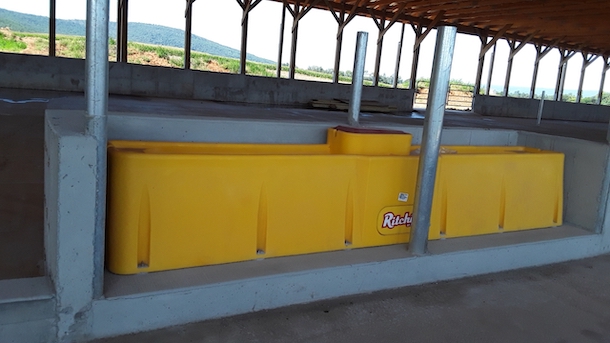 According to David Beede, Ph.D. and former C. E. Meadows Endowed Chair of Dairy Management and Nutrition in the Department of Animal Science at Michigan State University, dairy cattle will consume as much as 50 to 60% of their total daily water consumption immediately after milking when given a choice. This behavior has influenced the modern designs of milking barns with waterers strategically placed in return alleys, breezeways or crossovers. Waterers need to have an adequate refill rate to ensure that all the cows can drink as much as they want during a short period of time.
“Waterers that don’t perform well, meaning they weren’t filling quick enough can negatively impact milk production,” said Dr. Hickman. “You need enough water pressure and enough flow to meet the water demands of your cattle. Think about a water fountain that you or I might drink from that the water just barely dribbles out and you have a hard time getting enough water at one time or think about a water fountain that has too much pressure and the water just shoots out of the bowl. The availability of enough water for your animals is crucial to prevent subclinical dehydration in dairy cattle.”
Whether you are upgrading facilities or starting from scratch – new automatic waterers are a good investment
When Aaron Stauffer of Stauffer Farms in North Lawrence, New York began planning on a major expansion to the family-owned dairy farm in 2009, he partnered with ag construction specialists Franklin Builders of Chambersburg, Pennsylvania to build a modern and efficient operation.
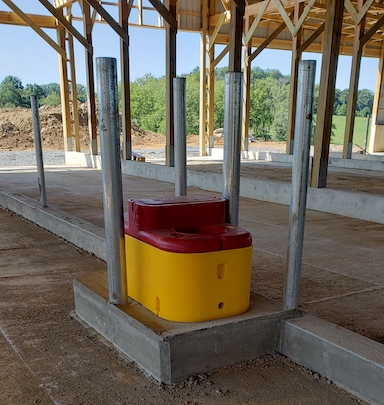
“It was a greenfield construction site and we expanded to house 3,800 total cows across two milking parlors and five barns,” said Stauffer, co-owner of Stauffer Farms. “When we started planning for the waterers, the foreman at Franklin Builders recommended Ritchie waterers and I was good with that. Since 2009 we have installed 56 Ritchie WaterMaster 1200 waterers and I can say that certainly compared to other brands I have had in the past, I have had less trouble with the Ritchie waterers and they have worked very well. We have been able to run these units energy free with little to no icing.
Our water pressure here in North Lawrence is fairly high and we use the high-pressure water valve from Ritchie to make sure we have the proper flow to the waterers – roughly 16 to 22 gallons per minute. Our Ritchie waterers are pretty low maintenance and once we got the pressure and flow figured out, we really didn’t have to make any adjustments and the units have been very durable. We had a couple that developed some cracks and Ritchie stands behind their product with an outstanding 10-year warranty. I just had to send a picture of the crack and the date code on the unit and Ritchie took care of it right away. In 2021 we are adding a new heifer barn for animals of weaning age up to one year old. We are installing 26 more Ritchie waterers and we will run heat to those units because the heifer barns usually run a little colder.”
Stauffer Farms currently milks 3,300 cows three times a day utilizing two double 24 parallel parlors. Daily production is roughly 88 pounds per cow. The majority of the milk is shipped to Dairy Farmers of America.
 “A lot of our milk goes to the Great Lakes Cheese plants in Adams, NY and Cuba, NY and also the Kraft Lowville cream cheese plant,” said Stauffer. “Our goals for the future include continuing to take advantage of opportunities to remain competitive in the industry. We are always evaluating ways to improve our bottom line and even minor decisions like using high-quality waterers help our farm run efficiently and profitably.”
Lots of choices in automatic waterers – choose wisely
There are two main types of dairy waterers on the market currently – concrete and polyurethane waterers (with or without stainless steel troughs). Other options include insulation, heating elements and constant flow valves.
“When you are looking to install new or upgrade your waterers it is important to consider how fast they refill, how durable the units are, maintenance requirements, warranty coverage and how easy they are to clean,” said Jeff Miller, Ritchie Industries Sales & Marketing Manager. “For 100 years, Ritchie has been made in America and we produce the fastest, energy-efficient founts in the industry. Our OmniMaster series is the latest in large herd innovation with a newly designed high-capacity drain to maintain the cleanliness of the fount. Every single Ritchie fount meets all Grade A dairy requirements, our poly units are 75% more efficient than comparable concrete units, they won’t pit and we offer several models that may qualify for utility incentives in several states. It all adds up to a more efficient and clean drinking environment. We have expertly engineered valves to serve any water pressure environment and your dairy cows won’t be able to outdrink a Ritchie.”
Ritchie Industries is headquartered in Conrad, Iowa, and was the first company to patent the automatic water valve in 1921. Ritchie has manufactured and sold over 3 million units globally.
Good water consumption = optimal yield
Proper water flow rate and drinking water consumption is critical to maintaining optimal milk production in your herd. Make sure your waterers are sized and calibrated to meet your cows’ water nutrition needs and invest in a high-quality waterer like Ritchie to deliver clean, fresh water on demand.