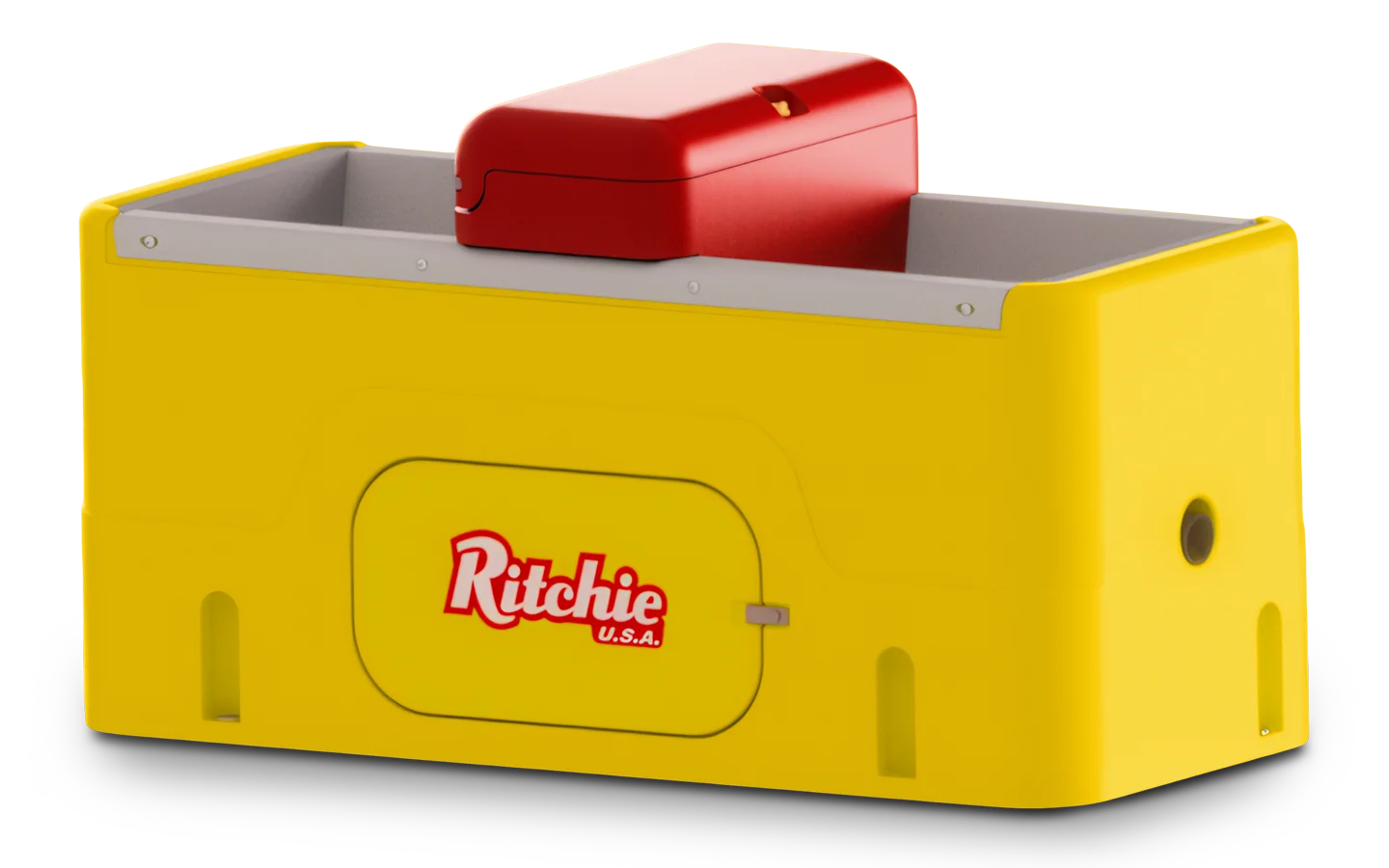
RITCHIE INTRODUCES FLEXIBLE NEW WATERING SOLUTION: THE OMNIMASTER 4
February 2026
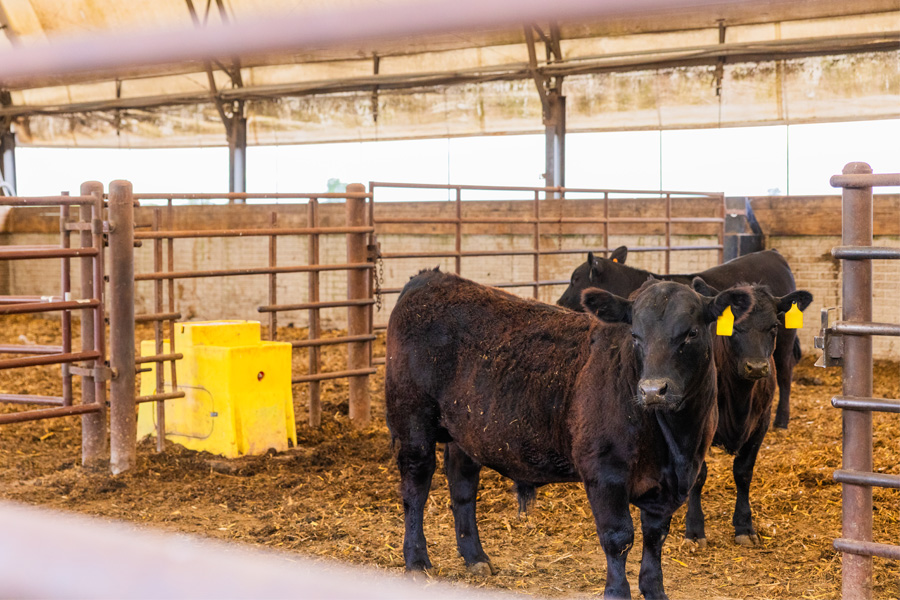
Ritchie, a leader in livestock watering innovation since 1921, introduces an all-climate solution for cattle operations that need a flexible watering solution for use in various pen configurations. The new OmniMaster 4 puts the proven performance and producer-favorite features of the OmniMaster 8 in a smaller footprint to reliably water up to 180 beef cattle or 90 dairy cows.
“Producers with midsize herds asked for a higher-capacity watering solution that would work in a variety of pen configurations,” said Ritchie CEO Robert Amundson. “We responded with the OmniMaster 4. Its two drinking areas provide cattle easier access to more water than comparable waterers while offering greater flexibility for pen layouts.”
Keeps herds hydrated
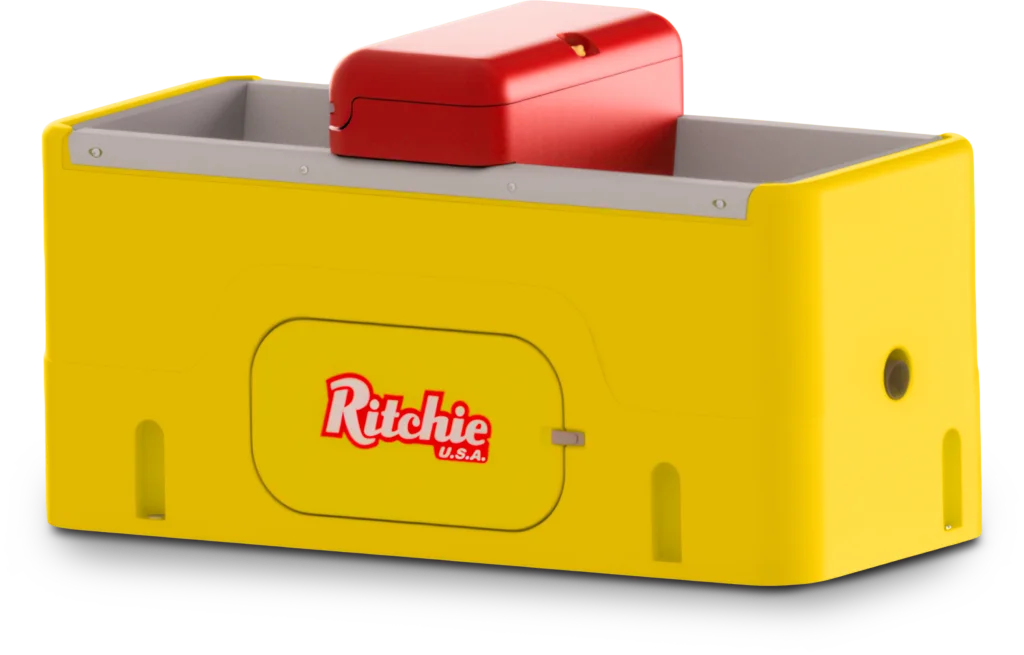 Its rapid-refill high-pressure valve means both sides of the OmniMaster 4 are always full, so animals stay hydrated. Here’s a closer look at some of this waterer’s other top benefits:
- Flexible setup: The center-valve design gives you more flexibility in how you set up your pens.
- Easy to clean: A large drain plug and recessed drain allow for fast and complete draining, simplifying cleaning.
- Easy maintenance: The popular flip-open top cover gives easy access to the valve and float, making maintenance simple.
- All climate: Stainless wraparound heated trough keeps water flowing even on the coldest days.
- Energy efficient: Fully insulated casing boosts energy efficiency and durability.
- Safe: Rounded edges and smooth transitions are safe for animals.
Built to last
Like all Ritchie products, the OmniMaster 4 is designed, molded and assembled in Conrad, Iowa. Its wraparound edge and impact-resistant polyethylene construction stand up to wear and tear from hooves while improved UV inhibitors extend its life. The OmniMaster 4 is also backed by Ritchie’s industry-leading 10-year warranty.
Specifications
The OmniMaster 4 is a testament to Ritchie’s century-long commitment to looking for better ways to deliver solutions that make producers’ lives easier. Like other OmniMaster waters, it combines the best features of the OmniFount and WaterMaster lines to deliver durability, convenience and reliable access to water.
- Drinking height: 24 inches (61 cm)
- Capacity: 27.5 gallons (104 L)
- Dimensions: 54 inches X 24 inches X 30 inches (137 cm X 61 cm X 76 cm)
- Power requirements: 548 watts (4.6 A @ 120 V)
Upgrading to automatic waterers on your operation is a big decision. But it can lead to substantial improvements in livestock health, pasture management and overall profitability. For many producers, the question isn’t if they should switch, but when. We talked to Dave Petty, a cattle producer from Eldora, Iowa, about why he made the transition to Ritchie automatic waterers and how he knew it was time for an upgrade. Read what he had to say about the benefits of upgrading and things you should consider when it’s time to make the move to automatic waterers.
Petty knew it was time for a change when he started noticing uneven grazing and that his herd just wasn’t performing like it should. “Some of my pastures did not have good water sources, which meant that I was overgrazing in some areas and undergrazing in others,” he explained. His cattle were burning extra energy just walking to far-off water, which took a toll on their health and kept them from making the most of the forage around them.
The solution? Installing automatic waterers. “That allowed me to properly graze my pastures without overgrazing, and to also fully utilize some parts of the operation that were not being grazed because of lack of water,” said Petty. Once he saw the difference the automatic waterers were making from a management and animal health standpoint, Petty didn’t think twice about adding more to his system.
Is it time to invest in automatic waterers?
When it comes to deciding whether it’s time to invest in automatic waterers, Petty suggests thinking long-term and asking yourself a few key questions:
Is the investment smart financially, and will it pay for itself over time?
Will it help the environment — like cutting down on water waste or preventing overgrazing in sensitive spots?
Does it make life easier for your crew and bring benefits to the community and the land?
“If it answers those three things to the good side, then I’d go ahead with it,” Petty said. He’s confident this three-part approach — often tied to the pillars of sustainability — is a solid way to guide any big farm investment.
4 telltale signs you’re ready for an upgrade
If you’re still using seasonal setups or open tanks, Petty said there are a few clear signs it might be time to switch to automatic waterers:
Water’s not where it needs to be.
If your water sources aren’t spread out enough, cattle will overgraze near the water and ignore pastures farther away.
Performance is off.
If your herd isn’t hitting gain or body condition score targets, or looking as healthy as they should, limited water access could be the reason.
Cows losing condition.
Cows need to hold their condition to stay healthy and raise strong calves.
You’ve got a gut feeling something’s wrong.
Sometimes you just know. If the herd seems “off,” water access might be the culprit.
Automatic waterers: an investment that pays off
Some people still think automatic waterers are a “nice-to-have,” but the truth is, they’re a smart, money-making investment. Petty gave a lot of reasons why. They allow you to:
- Be ready for any weather. A dependable system keeps water flowing in extreme cold or heat, so you’re not scrambling during a crisis.
- Drought-proof your herd. Even in dry spells, you’ll have steady water, which means you can make the most of your feed resources.
- Save time and labor. No more hauling water or thawing frozen pipes. This frees you and your crew to focus on other important jobs.
- Boost profits and care for the land. Automatic waterers don’t just help your bottom line — they also support good stewardship. With the right water distribution, you can:
- Get the most out of your pastures. Well-placed water means better rotational grazing and quicker forage regrowth.
- Improve forage quality. Moving cattle around lets certain areas rest, so the feed that grows back is higher quality.
- Keep cattle healthier. Healthy animals eat more, convert feed better and bring in better returns.
- Protect soil and grasslands. Even manure distribution builds soil health, while keeping cattle out of sensitive spots prevents erosion and overgrazing.
- Run more sustainably. Better resource use, healthier livestock and a healthier environment all go hand in hand.
Choosing a dependable solution
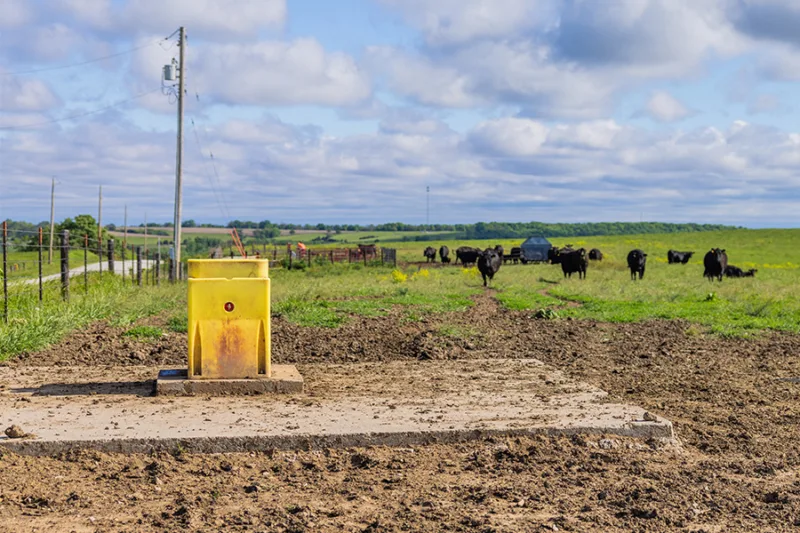 When it comes to choosing an automatic waterer, durability and easy maintenance are a must. Petty went with Ritchie because he knew the brand’s reputation and had seen for himself how long they last. “Ritchie has been around for a long time — over a hundred years — and I have noticed from some Ritchie waters that I have had, there’s very little maintenance necessary on them,” he said. He also noted the consistent design and reliability of Ritchie’s components, even in decades-old models, gives him confidence in his decision.
A smart move for the long haul
For anyone weighing the upfront cost of automatic waterers, they are an investment that can start paying you back sooner than you might think. The boost in production and animal health often shows up fast.
A good automatic waterer is built to last for decades, making it one of the best investments for long-term flexibility and profitability on an operation. Like Petty, you could start with a few units and expand over time as they demonstrate their value.
“It’s a long-term investment, but it’s rather a quick return in profitability,” said Petty.
Seasoned agricultural executive brings data-driven leadership, deep dealer expertise, and a lifelong passion for livestock to iconic waterer brand.
Ritchie Industries, a leader in automatic livestock watering systems, is proud to announce the appointment of John Paul Owen as Chief Commercial Officer (CCO). Owen brings more than a decade of experience in agriculture, sales strategy and distribution network growth to the team. He most recently was North American Sales Manager at Lely North America.
Owen’s journey to Ritchie reflects both professional ambition and personal connection. “I was a Ritchie customer myself,” he shared. “We installed units on our ranch in central Texas, and I literally never touched them again. When you’ve got fences breaking, tractors acting up or calves needing sorted, you don’t want to worry about whether your waterers will work. Ritchie products just did.”
Owen’s resume includes managing a cow-calf operation, building a dealer network across North America and leading sales teams in highly competitive and shrinking agricultural markets. At Lely, he oversaw a major transformation of commercial operations as he introduced digital sales pipelines, marketing automation and CRM infrastructure.
“Dealers are the lifeblood of any ag organization,” Owen emphasized. “I’ve spent time in nine countries and 36 states. I learned the best growth comes from empowering people on the ground. My goal is to build tools, strategies and support systems that make doing business with Ritchie easier and more profitable for our partners.”
Owen plans to leverage Ritchie’s reputation. “The hard part is done. Brand awareness is already there. Customers and dealers alike recognize Ritchie as the name in livestock waterers. That kind of legacy is incredibly rare. Now it’s about optimizing our strategy and operations to prepare for smart growth and innovation.”
The Chief Commercial Officer will oversee Ritchie’s sales, marketing, customer service and business development efforts. This position will focus on deepening relationships with distributors, enhancing customer engagement and expanding reach across key markets. This position will also help guide product strategy and innovation to ensure Ritchie remains at the forefront of meeting livestock owners’ evolving needs.
“Adding the CCO role is a truly exciting milestone for Ritchie Industries,” said CEO Robert Amundson. “It underscores our focus on driving sustainable growth by aligning our commercial strategy with customer needs and market opportunities. This new role will be key in turning the company’s vision into actions across sales, marketing and product development. This ensures the company continues to provide exceptional value and remains competitive in today’s environment.”
Owen’s hands-on experience — both in the field and in the office — uniquely positions him to lead Ritchie’s next phase of commercial growth. His commitment to sustainability and operational excellence aligns perfectly with Ritchie’s ongoing mission: to care for animals so your life is easier.
Ritchie, a leader in livestock watering innovation since 1921, unveils the longest and largest waterer in company history: the WaterMaster 1400. Ritchie understands that water is vital for every system in an animal’s body, from digestion to nutrient transport — no matter the herd size, which is why the WaterMaster 1400 was built to keep the largest herds hydrated. At 14-feet (4.26-meters) long and holding 110 gallons (416 liters), it provides fresh, clean water for up to 500 beef cattle or 250 dairy cows. Plus, its rapid-refill high-pressure valve keeps the WaterMaster 1400 trough filled so cattle stay hydrated all day, every day, which is essential for performance.
“Producers told us they needed a heavy-duty waterer for bigger herds, so we listened,” said Ritchie CEO Robert Amundson. “The WaterMaster 1400 not only meets Grade A dairy recommendations, but also delivers the energy savings, easy maintenance and durability our customers expect.”
Built for performance, designed for simplicity
From free-stall barns to feedlots, the WaterMaster 1400 is ideal for demanding environments. Its narrow trough fits easily in dairy barn crossovers and alleyways, while its impact-resistant polyethylene body stands up to the wear and tear caused by large herds and prolonged sun exposure in feedlots.
With optional immersion heaters and self-regulating heat cables, the WaterMaster 1400 is suited for all climates. So cattle stay hydrated year-round, and producers can skip the ice-chipping chore that comes with winter’s freezing temperatures.
Additional benefits include:
- Easy cleaning: Smooth surfaces, large 3-inch (7.62-centimeter) drains, and a sloped trough allow for quick emptying, cleaning, and refilling.
- Water savings: Trough divider increases flexibility and minimizes wasted water during cleaning.
- Energy savings: Requires up to 75% less energy in the winter compared to concrete models.
- Safe: Rounded edges and smooth transitions are safe for animals.
- Protected: No gaskets to crack or freeze thanks to Ritchie’s water-seal design. The water valve remains protected from cold air.
- Easy to install: Two people can install without any heavy equipment.
Built to last
Like all Ritchie products, the WaterMaster 1400 is engineered, molded and assembled in Conrad, Iowa. The company stands behind its waterers with an industry-leading 10-year warranty.
The WaterMaster 1400 opens the newest chapter in Ritchie’s century-long commitment to advancing animal hydration and herd performance.
Brent Voss says hydration is the lifeblood of his cattle operation in Dexter, Iowa. And that’s why having the best cattle waterers available is so important to him.
Since 1993, Voss has been raising a purebred Angus herd, now numbering 500 registered cows, with a production sale at the end of February each year. For Voss, ensuring his cattle have access to good, clean water 365 days a year is paramount.
The watering situation on Voss’ operation has evolved significantly since its early days, which involved windmills and propane to keep water thawed in the winter. “When we got our first automatic waterers with heaters, it was a great move for us,” he said. “We started with Ritchie, and we still have Ritchie … these waterers have kind of evolved with us over time and we’re very happy with them,” Voss added.
The best cattle waterer for animal well-being
Comparing automatic watering systems to natural sources like springs and ponds, Voss emphasized the importance of clean water for the overall well-being of his cattle, including their ability to raise great calves and improvement in their breed back program. He added that access to clean water also led to a conception rate increase and reduced some late-term abortions in his cattle.
“I actually drained all the ponds and installed a few Ritchie waterers on [one of my] farms so that I had good clean water for that farm.” He saw that his cattle were consistently drawn to the Ritchie waterers, preferring the good, clean, fresh — and especially cold — water they provide.
The best cattle waterer for easy maintenance
Voss’ decision to choose Ritchie waterers was influenced by his familiarity with them as he’d grown up seeing them on farms. And the confidence he had in Ritchie was compounded by recommendations from electricians and plumbers he works with. He knew they were easy to clean and easy to maintain.
The best cattle waterer for reliability
“When we installed our first Ritchie waterer, the peace of mind of having water in front of these cattle all the time and the confidence in that water was very nice,” Voss said. The flexibility to have Ritchie waterers in remote pastures is a reliable way to keep his herd hydrated. “We’re checking waterers every day on every herd and just double-checking. And 99.9% of the time, you never ever have an issue. And these waterers are true and reliable, and we’re just really confident in these waterers,” he added.
The best cattle waterer for durability
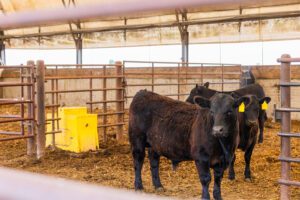 In terms of construction and durability, Voss ensures his concrete pads for the waterers are large enough for the cattle to stand on entirely, preventing issues with mud and hoof problems. He also raises the waterers four inches above the ground to keep them clear of manure, which he believes increases their longevity and prevents lines from freezing in harsh Iowa winters, where waterers are “challenged hard” by inclement weather.
Voss also attests to the durability of Ritchie waterers with his bulls, which are known for being rough on equipment. He employs robust anchoring systems, extending the concrete pads to ensure the waterers are securely fastened. “The Ritchie waterers that we’ve been using for a number of years, they’re really good poly waterers. These waterers look to me like they’re going to last a very, very long time,” Voss said.
Voss’ advice for other farmers
For a neighbor or first-time farmer, Voss’s advice is clear: invest in good, clean water first for the sustainability of any operation. “I would recommend Ritchie waterers to all of my neighbors. And the reason why I would recommend Ritchie is just because of the durability and the maintenance-free aspects of the Ritchie waterers,” said Voss.
“Hydration is essential for all of our animals, and that’s why we have Ritchie waterers on all our farms,” he concluded.