Dealer Locator 0

10 Reasons to Buy A Ritchie

June 2026

1. On-demand water is fresh water.

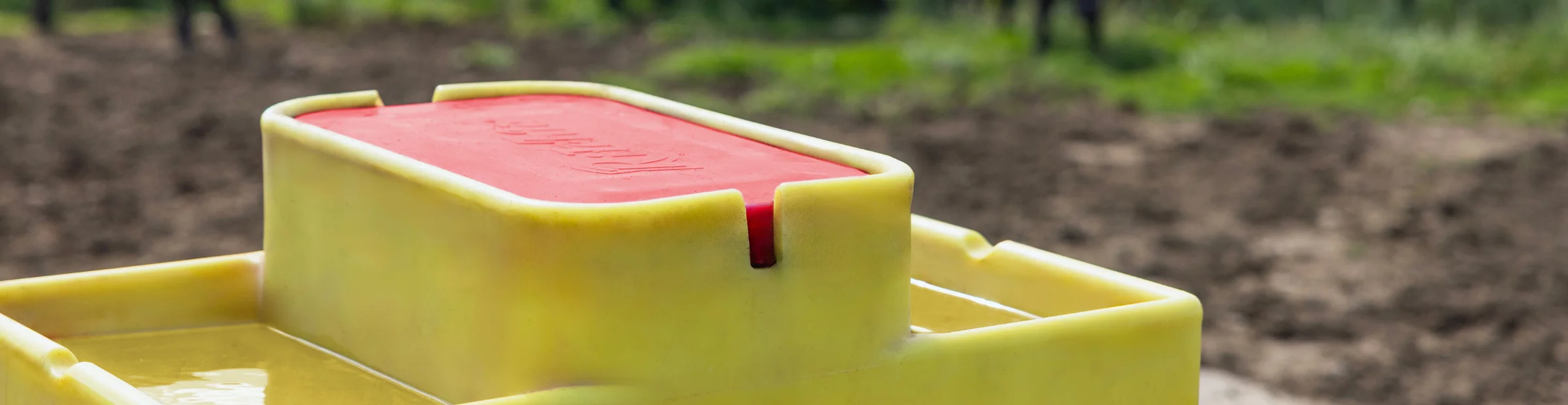
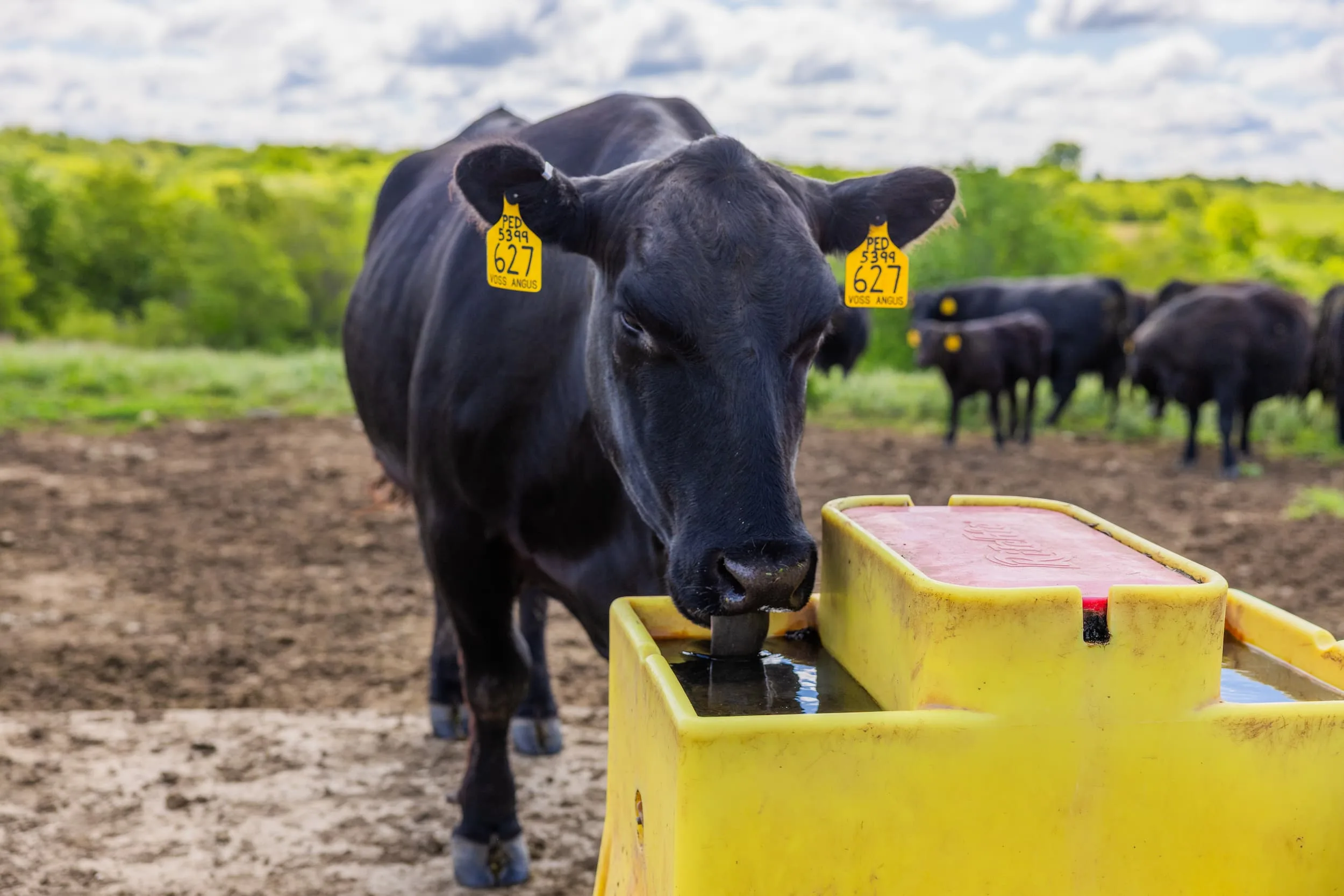
Automatic waterers take the guesswork out of hydration. Your animals get clean, fresh water when they need it — and you save time and energy in the process. Ritchie trough and valve combinations are built to keep water moving. They deliver plenty of flow when animals are drinking, while minimizing stagnant water when they’re not.

Our quick-flow valves come in two sizes to match your waterer’s trough, with flow capacities designed to handle a range of supply line pressures. So, no matter your setup, you can count on consistent, reliable performance.


2. You get the best warranty in the industry.

We stand behind what we build. That’s why our polyethylene (poly) waterers are backed by a 10-year limited warranty — five years full coverage, followed by five years prorated.* Our stainless-steel troughs are covered by a 10-year, 100% warranty against manufacturing defects and corrosion.

It’s simple: Reliable products should come with a warranty to match.

*Excludes Genesis product line (1-year warranty).


3. Our poly units are totally sealed.

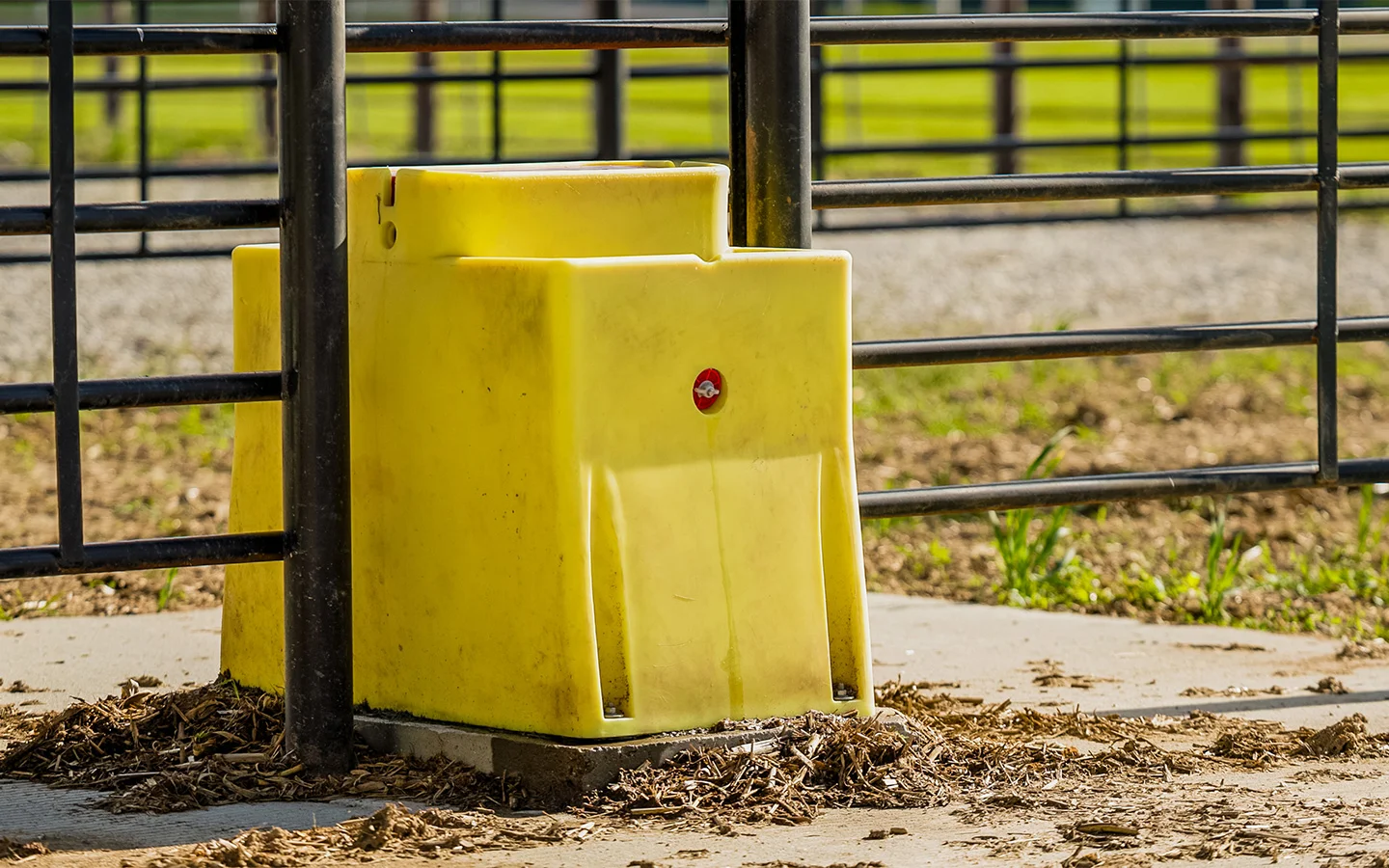
Our heavy-duty poly waterers are fully sealed to lock out moisture and protect the insulation inside. The poly is thicker than the competition’s, and the one-piece, roto-molded design adds serious durability.

We also build in UV inhibitors to help stand up to sun, season after season.


4. Our steel troughs are made of 304 stainless steel.

There are cheaper grades of stainless steel out there, but you won’t find them in Ritchie waterers. Our steel troughs are made of 304 stainless — the ultimate in durability and corrosion resistance.


5. Ritchie waterers are heavy duty, but not heavy.

Put a Ritchie waterer up against a competitor’sconcrete unit, and the difference is clear. Our troughs won’t pit. They’re easier to clean, more efficient to heat and help keep water cleaner for your animals.

Installation is simpler, too. Two people can get a Ritchie unit in place. No heavy equipment required. And when it comes to energy use, Ritchie waterers use up to 75% less than concrete units. Less waste. More efficiency.


6. Every product is designed with animal safety in mind.

Our stainless-steel troughs feature hemmed edges for a smooth, blunt finish — no sharp spots. Our heavy-duty poly waterers are designed with rounded, curved surfaces to help prevent injury.

And every heated stainless-steel trough is tested to meet applicable U.S. and Canadian safety standards, so you can trust what your animals are drinking from.


7. Our superior sealing technology keeps cold air away from valves.

A smart design that works as hard as you do: Our water seal design eliminates the need for gaskets. That means no freezing, cracking or tearing. It keeps cold air away from the valve, the heart of your waterer.

By protecting our high-capacity valves, we’re protecting your investment.


8. Every Ritchie meets Grade A dairy recommendations.

 You don’t have to search the entire Ritchie product line for a waterer that meets Grade A dairy recommendations — they all do!


9. Energy-efficient Ritchie waterers stay frost free without much cost.

Built to keep water flowing — not your energy bills climbing. Ritchie waterers are designed for efficient operation and to prevent freezing without driving up cost. See year-long energy estimates (based on $0.18 per kWh) on each product page to see just how much efficiency matters.

Backed by university and Ritchie testing and adjusted for regional conditions, these numbers highlight the advantage of poly construction and covered troughs when it comes to saving energy season after season.


10. Ritchie waterers are built to last.

Many producers may buy a Ritchie once every 20 years — and there’s a reason for that. Our waterers are built to last and proven to show up day in and day out. That kind of reliability comes from pride in workmanship and a focus on getting the details right.


Find the right fit for your operation, and you’ll see why Ritchie earns the kind of loyalty that sticks around for decades.

HOW MUCH WATER DOES YOUR HERD NEED?

June 2026

Do beef and dairy cattle have different water needs? The short answer: Yes. Hydration needs can vary dramatically between beef and dairy operations. But there’s a lot more to it than beef vs. dairy. Those needs vary even more when you’re talking about different seasons and stages of life. Calves, lactating cows and finishing cattle in summer heat all have different hydration needs. Understanding those changing demands can help support performance, health and water needs year-round.

Here you’ll find answers to some of the most common questions producers ask about cattle hydration.

Download the quick reference guide

Frequently asked questions that apply to both beef and dairy cattle

How do water needs change throughout an animal’s life?

Water needs change with every stage of life and then vary by breed and the environment. Here’s a general guide to the ranges of water needs per animal type.


WATER INTAKE BY ANIMAL TYPE
Animal Average daily water intake
Cow-calf pair 12-20 gal (45.42-75.71 L)
Dry beef cow 6-15 gal (22.71-56.78 L)
Feedlot cattle 8-25 gal (30.28-94.64 L)
Lactating dairy cow 30-50 gal (113.56-189.27 L)
Calves 2-5 gal (7.57-18.93 L)
Bulls 10-20 gal (37.85-75.71 L)


How does temperature affect cattle water intake?

Beef and dairy cattle have different water needs, but they both need more water as temperatures climb. During the summer months, animals work harder to regulate body temperature and maintain feed intake and performance — and the threat of heat stress is high. Factors like humidity, sun exposure, stage of production and diet all influence consumption, but it’s common for cattle to drink substantially more water during periods of hot weather. The chart below shows how water needs can change as temperatures climb.

CATTLE WATER CONSUMPTION BY TEMPERATURE
Temperature Beef Cattle Water Intake Dairy Cow Water Intake
20ºF (-6ºC) 6-8 gal/day (22.71-30.28 L/day) 15-20 gal/day (56.78-75.71 L/day)
40ºF (4ºC) 8-10 gal/day (30.28-37.85 L/day) 20-25 gal/day (75.71-94.64 L)/day)
60ºF (16ºC) 10-12 gal/day (37.85-45.42 L/day) 25-30 gal/day (94.64-113.56 L/day)
80ºF (27ºC) 12-16 gal/day (45.42-60.57 L/day) 30-40 gal/day (113.56 L-151.41 L/day)
90ºF+ (32ºC) 16-20+ gal/day (60.57-75.71+ L/day) 40-50 gal/day (151.41-189.27 L/day)


Here’s how water consumption for beef cattle herds can change with temperature.


EFFECTS OF TEMPERATURE ON ESTIMATED HERD WATER DEMAND
Herd size Cool Weather Intake

(40-60ºF)

Warm Weather Intake (80-90ºF) Extreme Heat Intake (90ºF+)
25 head 250-300 gal/day

(946.35-1,135.62 L/day)


350-400 gal/day

(1324.89-1,514.16 L/day)

450-500 gal/day

(1,703.44-1,892.71L/day)


50 head 500-600 gal/day

(1,892.71-2,271.25 L/day)

700-800 gal/day

(2,649.79-3,028.33 L/day)

900-1,000 gal/day

(3,406.87-3,785.41 L/day)

100 head 1,000-1,200 gal/day

(3,785.41-4,542.49 L/day)


1,400-1,600 gal/day

(5,299.58-6,056.66 L/day)

1,800-2,000 gal/day

(6,813.74-7,570.82 L/day)

200 head 2,000-2,400 gal/day

(7,570.82-9,084.99 L/day)

2,800-3,200 gal/day

10,599.15-12,113.32 L/day)

3,600-4,000 gal/day

(13,627.48-15,141.65 L/day)

Air temperature isn’t the only factor that affects water consumption. According to the University of Tennessee Institute of Agriculture, if the water temperature is greater than 80ºF, cattle are less likely to drink it. If possible, place waterers under shade structures to keep the water cool.

What is the impact of clean water access on cattle performance?

The quality of the water cattle drink has a significant influence on their performance because it drives nearly every function within the animal. Feed digestibility, milk production, weight gain and reproduction all depend on water. And it sets the animal’s metabolism rate.

According to Purina Mills, water also has a major impact on forage digestion in the rumen. Cattle are unique because the rumen provides nearly 40 gallons of water storage. And if they don’t get enough quality water, the rumen won’t be able to turn forage into energy and add pounds of production.

Have you tested the quality of water your herd is drinking? Many producers haven’t. Here are some water quality guidelines. Check with your vet, nutritionist or local department of natural resources about testing your water.

WATER QUALITY GUIDELINES FOR CATTLE
Contaminant Safe Levels
Total dissolved solids < 3,000 ppm
Sulfates < 500 ppm
Nitrates < 100 ppm
pH 6.0-8.5

Frequently asked questions about beef cattle hydration

How does hydration impact cattle weight gain?

Water consumption drives feed intake, so any factors that cause cattle to drink less will lead to reduced feed intake and consequently reduced performance, according to South Dakota State University Extension. Cattle generally drink 0.24-0.36 gallons (0.91-1.36 L) of water for every pound of dry feed they eat.

WATER INTAKE VS. FEED INTAKE
Water intake Feed intake
6-10 gal (22.71-37.85 L) 20 lb dry matter
8-15 gal (30.28-56.78 L) 30 lb dry matter


Do cattle drink differently on pasture than in a feedlot?

Cattle often drink differently on pasture compared to in a feedlot because their diets, movement patterns and access to water all change with the production environment. Pasture cattle may travel longer distances between grazing areas and water sources, which can affect both how often and how much they drink at one time. Grazing cattle also consume fresh forage that naturally contains moisture, especially during spring growth, which can reduce the amount of free-choice water they consume compared to cattle eating dry hay or concentrated feedlot rations.

In feedlots, cattle are typically consuming drier, higher-energy rations, which increases water demand. Research and extension data consistently show that water intake rises as dry matter intake increases, especially during hot weather. Feedlot cattle also tend to drink in groups and may crowd around waterers during heat events, making water space, refill rates and accessibility especially important, according to the University of Nebraska – Lincoln.

How far should cattle walk to water?

A rule of thumb when determining the location of water sources is to put them where cattle need to walk less than 1 to 1.5 miles to their water, according to Farm Progress. And if it’s rough pasture, they shouldn’t walk more than one-half to three-quarters of a mile, preferably less.

Do calves and young beef cattle need special water access?

According to South Dakota State University Extension, calves may not drink (and consequently eat very little) if they have never seen a waterer or water tank before. If they aren’t drinking, let waterers run over for a day or so to mimic the sights and sounds of natural water sources and help encourage calves to drink.

Frequently asked questions about dairy cattle hydration

How much water do lactating cows need?

Lactating dairy cows require approximately 0.54–0.60 gallons of water* per pound of milk produced. So, for example, a cow producing 100 pounds of milk daily could consume as much as 50 gallons (189.27 L) of water, according to the University of Nebraska Extension.

Why do dairy cattle require so much water?

Dairy cows need so much water because water plays a direct role in both milk production and feed intake. Milk itself is made up of nearly 87% water, so high-producing dairy cows require large amounts of water every day to support consistent milk production. As milk output increases, water demand rises alongside it.

Water intake is also closely tied to dry matter intake. Dairy cows that consume more feed require more water to properly digest and utilize nutrients, maintain rumen function and support overall health and production. If water consumption is limited — whether due to heat stress, poor water quality or inadequate access — feed intake often declines first, followed by reduced milk production and performance.

What happens if dairy cows don’t consume enough water?

If dairy cows don’t drink enough water, you’ll see lower feed intake, which will impact their health and performance with reduced milk production. Lower consumption of water will also increase cows’ risk of heat stress.

Does fresh water increase milk production in dairy cows?

According to the University of Nebraska – Lincoln, providing insufficient water or water of poor quality to dairy cattle can limit milk production and growth, and cause health problems. An adequate supply of clean water promotes normal rumen function, high feed intake, digestion and nutrient absorption. For guidance on water quality, see our Water Quality Guidelines for Cattle chart.

Where should waterers be placed in dairy facilities?

You’ll want to consider the traffic flow in your facility and areas that will reduce competition for water. Placing waterers near the parlor and feed bunks is always a good idea.

What should producers look for in a watering system?

When you’re looking for the best automatic waterers for your operation, reliability and cleanability in any season are important. And you’ll want to match water capacity and flow rate to your herd’s needs. This chart is a great guide.

                                           WATER CAPACITY AND FLOW RATE BY HERD SIZE
Herd Size Minimum Water Capacity Recommended Water-Flow Rate
25 head 200-300 gal/day (757.08-1,135.62 L/day) 3-5 gal/min (11.36-18.93 L/min)
50 head 400-600 gal/day (1,514.16-2,271.25 L/day) 5-8 gal/min (18.93-30.28 L/min)
100 head 800-1,200 gal/day (3,028.33-4,542.49 L/day) 8-12 gal/min (30.28-45.42 L/min)
200 head 1,600-2,400 gal/day (6,056.66-9,084.99 L/day) 12-20 gal/min (45.42-75.71 L/min)

The water needs of beef and dairy cattle may look different, but the goal stays the same: ensuring cattle always have reliable access to clean, fresh water that supports health and performance in every season and stage of life. Your Ritchie dealer can help find the right waterers for your needs.

Download the quick reference guide

Footnotes:

*Number converted from from 4.5-5 lbs of water, University of Nebraska Extension.

RITCHIE INDUSTRIES APPOINTS CHAD HUYSER AS CHIEF EXECUTIVE OFFICER

May 2026

Ritchie Industries, a leading manufacturer of livestock watering products backed by Granite Creek Capital Partners, today announced the appointment of Chad Huyser as chief executive officer. Huyser will lead Ritchie’s next phase of growth, building on the company’s 105-year legacy of innovation, quality and reliability.

Building on Ritchie’s strengths

In his role, Huyser will guide Ritchie’s next phase of growth while supporting the people, products and stakeholder relationships that have made the company a trusted leader in livestock watering. He will focus on continuing Ritchie’s tradition of product innovation, expanding solutions for end users and further elevating Ritchie’s role in modern livestock production while preserving the values that have long defined the brand.

“We find ourselves at a significant inflection point across agriculture,” Huyser said. “Today’s landscape is shaped by evolving dynamics that impact our customers’ decisions every day. Our role is to stay deeply connected to producers and their needs, while continuing to innovate in ways that improve efficiency, simplify management, and support our customers’ long-term success.”

Huyser’s vision is centered on advancing durable, energy-efficient watering solutions while exploring technology that enables producers to make more informed, data-driven decisions.

“Reliable access to drinking water is one of the most important drivers of animal health and performance,” Huyser said. “By continuing to deliver reliable solutions for producers, while thoughtfully integrating smart, practical technology, we have the opportunity to turn something as fundamental as water into a true on-farm advantage.”

Experience rooted in ag, focused on the future

As a proud “Iowa farm kid,” Huyser grew up on a Central Iowa livestock and row-crop operation, where he developed a deep-rooted passion for agriculture that continues to guide his work today.

“We have both a unique opportunity as well as a responsibility to be a collective voice in agriculture,” Huyser said. “Our industry is uniquely positioned to make a meaningful impact in feeding a growing population, but that position cannot be taken for granted, especially given the challenges facing our producers and owners. Agriculture is not an easy business, yet it remains some of the most rewarding work carried out by families across the country and around the world every single day.”

Huyser comes to Ritchie with nearly 30 years of global leadership experience across equipment manufacturing, finance, operations, and sales and marketing. His career includes roles with Vermeer Corporation, ARGO Tractors, De Lage Landen and Lely International. He most recently served as president and managing director for Lely North America, where he oversaw all regional operations and led the organization through significant growth and expansion during his 19-year tenure.

“We are excited to welcome Chad to Ritchie,” said John Paul Owen, chief commercial officer at Ritchie. “Having worked with Chad for nearly a decade at Lely North America, I have seen firsthand his ability to build great teams, support strong brands and stay closely connected to customers. I look forward to what the future holds for Ritchie under his leadership.”

“Chad brings global leadership experience, a deep-rooted understanding of Ritchie’s agricultural end markets and a strong record of supporting customer-focused growth,” said Jim Clark, partner at Granite Creek Capital Partners. “We’re excited for his leadership as Ritchie continues to evolve and serve producers with the reliable solutions and customer-first values that have defined the company for generations.”

Under Huyser’s leadership, Ritchie is well-positioned to build on its strong foundation and bring together reliability, innovation and practical technology to help producers keep one of the most essential elements of any livestock operation flowing: water.

“Stepping into a role held by only a select few leaders over Ritchie’s more than 100-year history is an exceptionally rare opportunity,” Huyser said. “I’m proud to help steward this iconic brand forward.”

HOW TO INSTALL AN AUTOMATIC LIVESTOCK WATERER (THE RIGHT WAY)

May 2026

Installing an automatic waterer the right way makes all the difference in its durability and performance. This, combined with regular cleaning, will help keep your Ritchie running well for many years — even past our industry-leading 10-year warranty.

Check out the answers to these common questions to see how we recommend getting it done.

What size water supply line do I need, and how deep should it go?

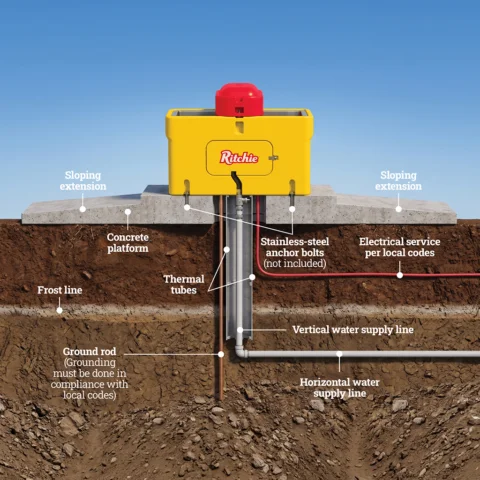
A minimum 3/4-inch waterline is required, but we recommend going with a full 1-inch diameter line for better flow and long-term performance. Be sure to flush your waterline before hooking up your waterer because small debris can lodge in the valve and keep it from sealing.

When it comes to depth, it’s not just about freeze protection. Proper depth helps regulate water temperature — keeping it warmer in winter and cooler in summer. So, don’t cut corners: Bury the horizontal supply line at least 4 feet deep or 1 foot below your local frost line, whichever is deeper.

Want easier maintenance down the road? Install a shut-off valve beneath the unit. You’ll thank yourself later.

Do I really need thermal tubes?

If you want reliable year-round performance, yes — you do. Ritchie thermal tubes are designed to protect your waterline and maintain consistent temperatures. To get the most out of them:

  • Choose the correct tube length for your setup.
  • Center the vertical waterline inside the tube.
  • Extend the tube at least 1 foot below the frost line.

And one important note: Don’t add insulation inside the tube. It may seem helpful, but it can actually create a pathway for frost.

What’s required for the electrical connection?

You don’t want to take shortcuts with your electric components. They need to be done right to ensure safe operation to protect your animals and your investment. You should:

  • Always use a qualified electrician.
  • Follow national and local electrical codes.
  • Include a proper disconnect in the fixed wiring.

How should I build the concrete platform?

A solid base keeps everything working as it should. We recommend:

  • A 4- to 6-inch-thick concrete pad.
  • A minimum 18-inch perimeter step around the unit.
  • Additional concrete extending outward, sloped away for drainage.

Make sure the platform is level because it’s critical for proper waterer function and makes it easier for animals to drink. A concrete pad large enough for an animal to stand on with all four legs improves footing, reduces mud and keeps things cleaner. And, for waterers serving a lot of animals, go bigger.

How do I properly anchor the waterer?

This is where precision matters. Skipping anchors — or guessing placement — can lead to movement, leaks, and long-term issues. Lock it in right the first time. Be sure to:

  • Use stainless steel anchor bolts.
  • Secure the unit using all provided anchor locations.
  • Set anchor positions using the actual waterer as your template.

What about grounding and safety?

Grounding isn’t optional. It’s essential. You must:

  • Install a grounding rod according to local and national codes.
  • Use a separate stranded copper conductor ().
  • In confinement areas, an equipotential plane is required by the National Electrical Code (NEC).

Most states in the U.S. follow NEC standards, but always check with your local electrical inspector to be sure. If you are outside of the U.S., consult your distributor.

What’s the key to long-term livestock waterer performance?

It’s simple: install it right, then stay on top of maintenance. Every detail, from line depth to a level pad, adds up to better performance and fewer headaches later on. Pair that with regular cleaning, and your Ritchie waterer won’t just meet expectations — it’ll outlast them.

An installation job well done is one that lasts.

Following best practices is key to installation — but so is thinking through the real-world conditions your waterer will face. From heavy equipment and animal traffic to seasonal use or placement in muddy, low-lying areas, small adjustments during installation can make a big difference in long-term performance. Talk to your Ritchie distributor if you have questions about how your setup might impact your install. They can help you plan to keep your waterer reliable and efficient for years to come.

More questions?

Do you have questions about installing a specific Ritchie waterer? Check out our library of installation manuals. You can also find some installation videos on our YouTube channel.

RITCHIE INTRODUCES FLEXIBLE NEW WATERING SOLUTION: THE OMNIMASTER 4

February 2026

Ritchie, a leader in livestock watering innovation since 1921, introduces an all-climate solution for cattle operations that need a flexible watering solution for use in various pen configurations. The new OmniMaster 4 puts the proven performance and producer-favorite features of the OmniMaster 8 in a smaller footprint to reliably water up to 180 beef cattle or 90 dairy cows.

“Producers with midsize herds asked for a higher-capacity watering solution that would work in a variety of pen configurations,” said Ritchie CEO Robert Amundson. “We responded with the OmniMaster 4. Its two drinking areas provide cattle easier access to more water than comparable waterers while offering greater flexibility for pen layouts.”

Keeps herds hydrated

Its rapid-refill high-pressure valve means both sides of the OmniMaster 4 are always full, so animals stay hydrated. Here’s a closer look at some of this waterer’s other top benefits:

  • Flexible setup: The center-valve design gives you more flexibility in how you set up your pens.
  • Easy to clean: A large drain plug and recessed drain allow for fast and complete draining, simplifying cleaning.
  • Easy maintenance: The popular flip-open top cover gives easy access to the valve and float, making maintenance simple.
  • All climate: Stainless wraparound heated trough keeps water flowing even on the coldest days.
  • Energy efficient: Fully insulated casing boosts energy efficiency and durability.
  • Safe: Rounded edges and smooth transitions are safe for animals.

Built to last

Like all Ritchie products, the OmniMaster 4 is designed, molded and assembled in Conrad, Iowa. Its wraparound edge and impact-resistant polyethylene construction stand up to wear and tear from hooves while improved UV inhibitors extend its life. The OmniMaster 4 is also backed by Ritchie’s industry-leading 10-year warranty.

Specifications

The OmniMaster 4 is a testament to Ritchie’s century-long commitment to looking for better ways to deliver solutions that make producers’ lives easier. Like other OmniMaster waters, it combines the best features of the OmniFount and WaterMaster lines to deliver durability, convenience and reliable access to water.

  • Drinking height: 24 inches (61 cm)
  • Capacity: 27.5 gallons (104 L)
  • Dimensions: 54 inches X 24 inches X 30 inches (137 cm X 61 cm X 76 cm)
  • Power requirements: 548 watts (4.6 A @ 120 V)

Select up to 3 products to compare

Show/hide comparison banner